
Robotics
Having already revolutionized the production line, robots promise to transform our lives in myriad ways. Here you'll find the news and opinion on the latest advances in robotics and where they are taking us.
Latest News
-
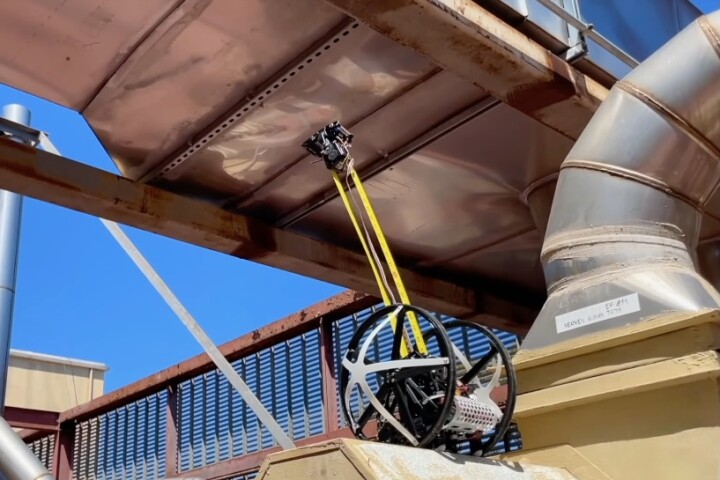
Video: Ingenious EEWOC robot uses a tape measure to climb quickly
April 23, 2024A new wheeled robot is able to climb metal structures in a clever and unique way – it uses an extendible tape-measure limb. Descendants of the bot may one day find use inspecting or repairing things like towers, bridges, power stations and ships. -

Video: Bio-inspired aquatic robot shoots through the water like a penguin
April 18, 2024Penguins are fast, fantastic swimmers, so why not make an underwater robot inspired by them? That's just what German underwater tech company EvoLogics has done, with its new-and-improved Quadroin AUV (autonomous underwater vehicle). -

Video: Boston Dynamics unveils stronger, more capable electric Atlas robot
April 17, 2024Boston Dynamics has unveiled a stronger, more agile, fully electric version of its Atlas humanoid robot. The kinda creepy-looking thing is already slated to enter use on Hyundai's automotive production line. -

AI-powered robots can now autonomously repair other bots
April 17, 2024Back in January, researchers showed off the kitchen skills of an open-source Aloha housekeeping robot. Now the Unleashed project gets to grips with knotting shoelaces, hanging shirts and even repairing other robots. -

Farewell Atlas, you running, spinning, backflipping robot marvel
April 17, 2024After almost 10 years of often-jaw-dropping achievements, Boston Dynamics has said farewell to Atlas, the world’s most dynamic – and groundbreaking – humanoid robot with a compilation video of thrills (and spills) and behind-the-scenes footage. -

Video: Multi-talented underwater robot uses fins to swim, walk and crawl
April 15, 2024A new underwater robot can swim through the water with fins, and walk or crawl along the bottom when necessary. These capabilities could really give it a leg up – pun fully intended – at outperforming its traditional thruster-powered counterparts. -

Three-legged asteroid-hopping robot passes Zero G airplane-ride test
April 11, 2024A three-legged robot could one day be hopping across the surface of asteroids, searching for valuable minerals. Known as the SpaceHopper, the bot was recently put to the test on a zero-gravity aircraft flight. -
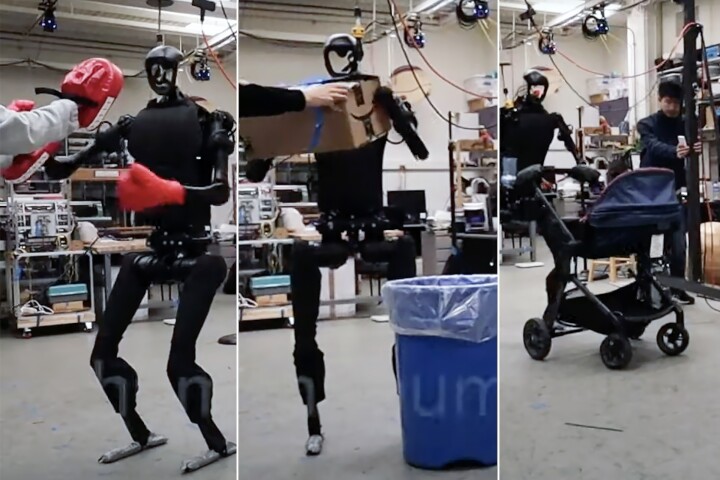
How blue-collar workers will train the humanoids that take their jobs
April 10, 2024Researchers have developed a reinforcement learning-based framework that allows a full-sized humanoid robot to be teleoperated by a human in real-time using only an RGB camera. Which begs the question: Will manual labor soon be performed remotely? -

Video: Talking Chinese humanoid is hot on the heels of OpenAI/Figure
April 04, 2024Following in the footsteps of the GPT-enhanced Figure 01 humanoid we marveled at last month, China's UBTech has partnered with Baidu to give its new industrial Walker S humanoid the power of natural speech and real-time reasoning. -

Hyundai's new coffee delivery robot rides elevators by itself
April 03, 2024Hyundai and Kia are gunning for office mailroom jobs with the introduction of the DAL-e Delivery robot, that can not only distribute packages around a building autonomously, but can also do the coffee run. -

Star-Wars-inspired robot rolls on a round body and uses legs to steer
March 28, 2024Inspired by the wheel-bodied battle droids from Star Wars, a scientist has created a robot that rolls along on one big wheel, using its legs to steer. Instead of smashing the Rebel Alliance, however, this bot may one day be making deliveries. -

Robot head senses your smile before it happens and eerily responds to it
March 28, 2024A robot that senses when a human is about to smile and simultaneously responds with one of its own could represent a big step towards developing robots with enhanced communication skills more conducive to building human trust, a new study suggests. -

Hybrid underwater robot takes aim at scuba-diving tasks
March 27, 2024The uOne underwater robot may soon be taking on risky, labor-intensive tasks currently performed by human scuba divers. It boasts a unique combination of traits from two different types of undersea bots. -

Video: Unitree H1 is first humanoid to nail a backflip without hydraulics
March 21, 2024After setting a new world speed record for humanoid robots earlier this month, China's Unitree is now claiming another. Its latest H1 bipedal takes the title for first to perform a standing backflip without the use of hydraulics. -

NVIDIA aims to speed up humanoid development with Project GR00T
March 20, 2024NVIDIA has announced that it's building a new AI platform for just about all of the big players in humanoid robot development, which is based on a general-purpose foundation model that's possibly named after a Marvel talking tree-like creature.
Load More