
Marine
The latest in boats, yachts and submarines.
Latest News
-

Video: Spacious bubble-sub lets you tour the sea floor in first class
April 24, 2024The public (at least the rich public) will soon be able to take a break from their luxury cruise to ride a luxury submersible. Triton Submarines has delivered its first Triton 660/9 AVA to a cruise company to take passengers into the depths in style. -

ABB's cycloidal marine propellers: Efficient thrust in any direction
April 12, 2024Earlier this month, we featured a Whale Design propeller that looked to nature for improved efficiency. Switzerland's ABB Marine has also been inspired by "the dynamic motions of a whale's tail" for its multi-blade Dynafin propulsion concept. -

Cinematic ROV takes filmmaking to new depths
April 10, 2024Unlike most other ROVs, the Boxfish Luna is designed specifically for underwater filmmaking. It records video at a resolution of 8K/30fps and can descend as deep as 1,000 m (3,281 ft) – so all you giant squids out there, get ready for your close-up. -

Hubless propeller mimics whale flippers for improved drag and efficiency
April 04, 2024BlueNav is bringing a more natural spin to its electric marine drive lineup. The all-new Whale Design propeller features blades that follow the contours of a whale to improve system efficiency. -

Dual-drive electro-foil jet ski levitates toward the future
March 22, 2024Enautic started life with a hydrofoil e-jet ski before turning all its attention to a foil mini-boat. It seems it never totally shelved its original PWC, though, as it now presents the WaveFlyer Rogue with intent to "redefine what a PWC should be." -

Ultralight eFoil gets streamlined for surfy, fast-carving ride
March 21, 2024Australia's Flite has announced its full 2024 range of eFoil boards, which includes a slender lightweight member of the pro-focused Ultra family. The Ultra L2 sports carbon components designed by Marc Newson, and a folding prop from Mercury Marine. -

Green Pioneer: World-first ammonia ship fills up in Singapore
March 20, 2024In 2021, Australian mining and cleantech company Fortescue announced a plan to float the world's first ammonia-powered ship by 2022. It's a bit late, and not quite as ammonia-powered as we hoped, but the Green Pioneer now appears ready to roll. -

Ultra-efficient looped propeller gets contra-rotating double upgrade
March 15, 2024Sharrow's extraordinary looped propellers were already some 30% more efficient than traditional designs – and now the company has put two of them together into a coaxial, contra-rotating prop that promises to be even more energy-efficient. -

Modular underwater jet scooter delivers 2.3 m/s of subaquatic boost
March 11, 2024Exploring the world under the waves can be exhilarating, and exhausting. An underwater scooter could help you venture farther and discover more, and the latest from China's LeFeet is currently motoring through Kickstarter. -

Magonis slaps new Flux electric outboard on fastest ultralight e-boat
March 05, 2024Magonis launched one of the sleekest e-boats on the water in 2021, an 18-footer with light vacuum-infused hull. The Spanish shipyard has now teamed with US powertrain company Flux Marine to equip the Wave e-550 with a fast, powerful 40-kW outboard. -
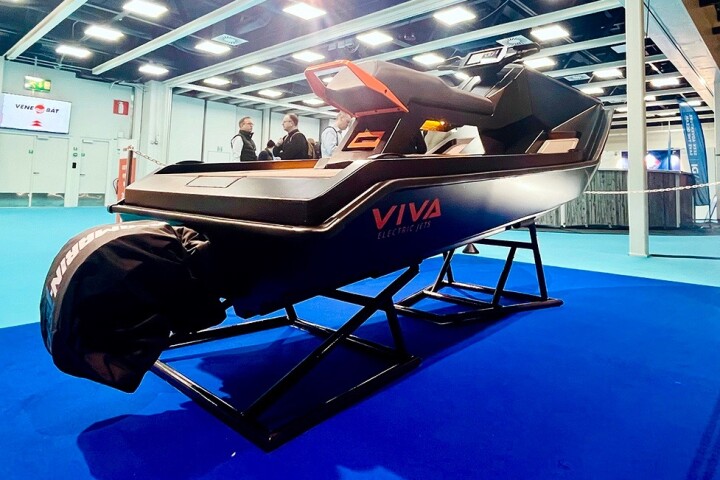
174-hp electric jet ski packs instant boost and 1-hour rapid charging
February 23, 2024A jet ski The Batman would ride – that's how Finnish startup Viva Electric Jets describes its debut product of the same name. The electric new PWC promises speeds close to 60 mph (96.5 km/h) backed up by one-hour rapid charging. -

Oru motorizes origami kayaks with portable electric outboard
February 21, 2024Oru Kayak has long offered some of the market's most compact, conveniently portable watercraft. Now the company is expanding the appeal of its lineup by pairing its vessels with an equally compact, portable electric drive system. -

Vision complements e-outboards with "unsinkable" fully recyclable boat
February 21, 2024Vision Marine, the company behind the world's most powerful electric outboard, has launched the Phantom, a rotomolded plastic boat that's tough enough to last a generation and ready to be recycled at lifecycle's end. -
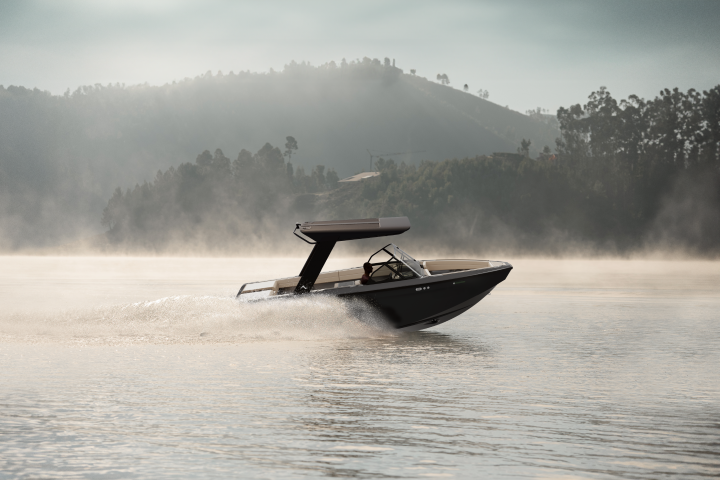
Former SpaceX engineers launch high-torque electric wakeboat
February 20, 2024Electric boat-maker Arc recently made the final delivery of its limited-edition One model, and is aiming its second build at the mass market. The Arc Sport is designed to make waves, allowing boarders to get tricky in its wake. -

Yamaha's world-first hydrogen outboard unveiled on prototype boat
February 14, 2024Yamaha previously announced it would show a prototype hydrogen outboard at the 2024 Miami Boat Show. Instead of simply revealing the motor, it's installed it on a prototype boat complete with fuel delivery system. Testing will begin this year.
Load More