
Military
The military has been a key driver of technology throughout history and the 21st century is no exception. Drones, GPS and the internet itself are just some of the transformative technologies originally developed for the military that have found commercial applications, and the list continues to grow.
Latest News
-
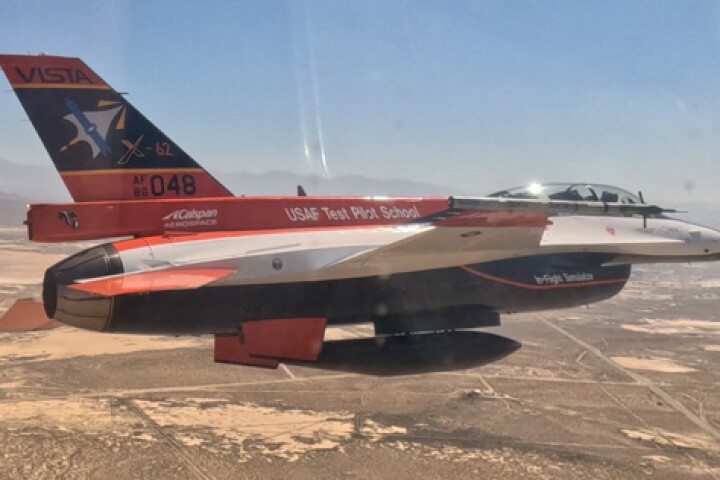
Video: World's first dogfight between AI and human pilot
April 22, 2024An F-16 fighter plane running on artificial intelligence has engaged in the first-ever aerial dogfight exercise with a human-piloted counterpart. This is the first footage of the mock battle, which comes out of DARPA's Air Combat Evolution program. -

Ghost Shark: The huge stealth advantage of autonomous submarines
April 19, 2024Australia's robotic submarine program takes delivery of its first Ghost Shark Extra-Large Autonomous Undersea Vehicle (XL-AUV) prototype – a machine that ditches the pressure hull and life support to gain an edge in size and stealth. -
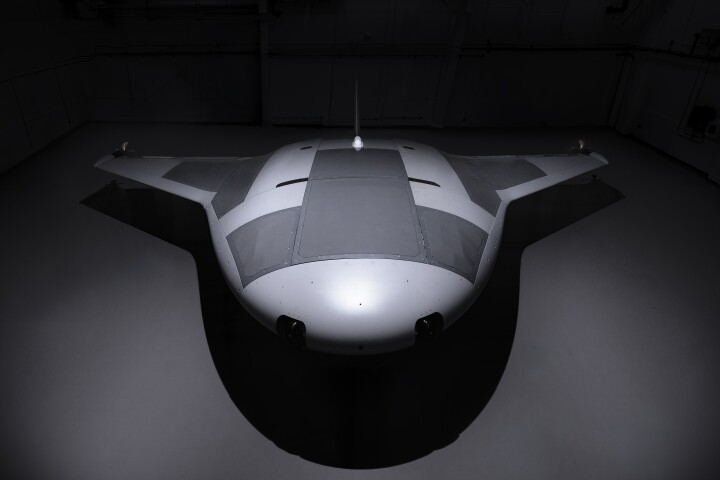
Northrop Grumman debuts Manta Ray robotic underwater glider
April 10, 2024Northrop Grumman introduces its first completed prototype Manta Ray Uncrewed Underwater Vehicle that it is developing for DARPA. The extra-large submarine glider is designed to carry out long-range undersea missions without human assistance. -

Four long-range anti-ship missiles team up in historic test
April 08, 2024Demonstrating that semi-autonomous weapons are the mainstay of the future and not an oddity, the US Navy and Lockheed Martin have completed a test of four Long-Range Anti-Ship Missiles (LRASM) simultaneously in flight with minimal human guidance. -

Decoy launchers clone entire Navy stealth ships on an enemy's radar
March 27, 2024The Royal Navy is banking on state-of-the-art decoy launchers to protect its stealth ships. The £135 million (US$170 million) Ancilia Trainable Decoy Launcher project will counter the latest missile and drone threats. -

Final tests completed on Lockheed Martin' hypersonic missile
March 21, 2024The US Air Force has completed testing of its hypersonic AGM-183A Air-launched Rapid Response Weapon. The test was carried out on March 17, 2024 when the missile was dropped from a B-52H Stratofortress at the Reagan Test Site in the Marshall Islands. -

Video: Hypersonic rotating detonation engine in sustained test burn
March 11, 2024A revolutionary alternative to conventional rockets that uses controlled explosions has completed its first long-duration engine test as part of Venus Aerospace's partnership with DARPA to develop a Rotating Detonation Rocket Engine. -
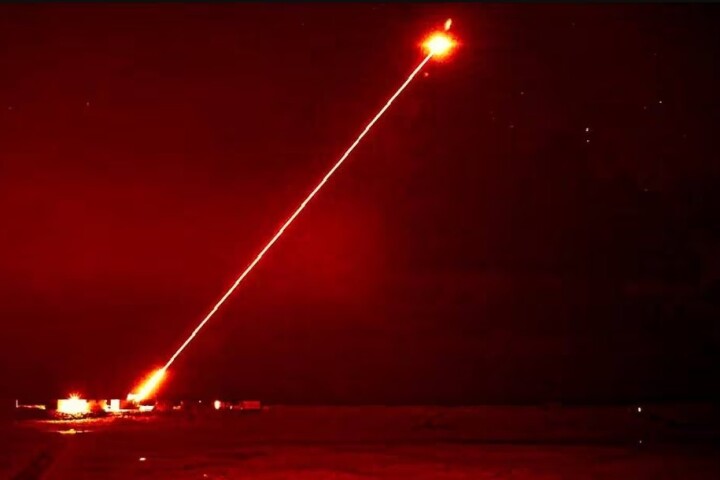
Declassified video shows DragonFire laser weapon in action
March 11, 2024In a newly declassified video, the $127 million DragonFire high-power laser weapon can be seen spectacularly blasting through mortar rounds and shooting down drones. It's the best look we've had yet of the top-secret battlefield game-changer. -
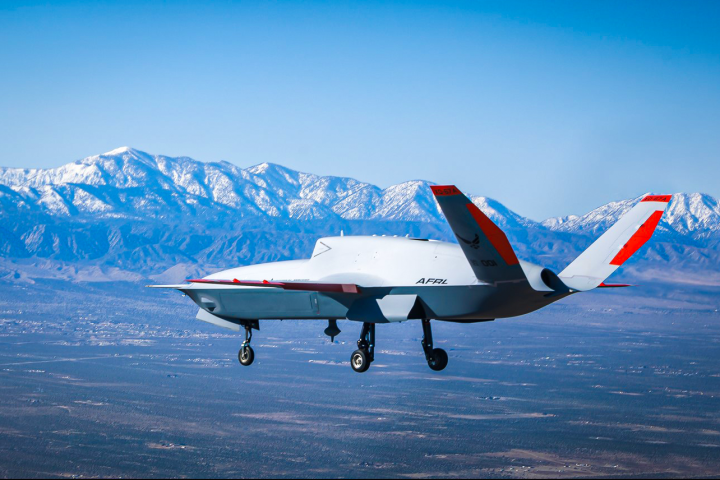
Maiden flight for the XQ-67A Loyal Wingman – the drone built like a car
March 03, 2024The US Air Force's XQ-67A Loyal Wingman combat drone has taken to the air for the first time. Built by General Atomics using automotive design techniques, it promises to be a cheaper, more flexible alternative to other UAVs. -

New thermal scope lets snipers see bullets in flight without tracers
February 15, 2024Defense contractor Teledyne FLIR has unveiled its new thermal sniper scope that can see its own bullets fly by day or night at ranges up to 2,200 m (1.3 miles), allowing them to engage targets at long range while remaining unseen. -

Bell ground tests high-speed tiltrotor technology for SPRINT X-plane
February 11, 2024Bell has released a video showing off its High-Speed Vertical Takeoff and Landing (HSVTOL) technology in action. The two-minute video shows a ground test of the nacelle system used to lift and land a VTOL X-plane before converting to jet flight. -

BAE Systems shows off mystery drone at defense show
February 07, 2024In a teaser of things to come, BAE Systems has displayed a model of its future drone at the World Defense Show in Riyadh. Steeped in more mystery than a Raymond Chandler novel, it gives us a hint of what future military drones might look like. -

US Space Force wants orbital filling stations for its satellites
February 06, 2024Northrop Grumman's Passive Refueling Module (PRM) has been tapped by the US Space Force as the preferred model to set the standard for Space Force's Space Systems Command (SSC) to refuel satellites in orbit to extend their mission life. -
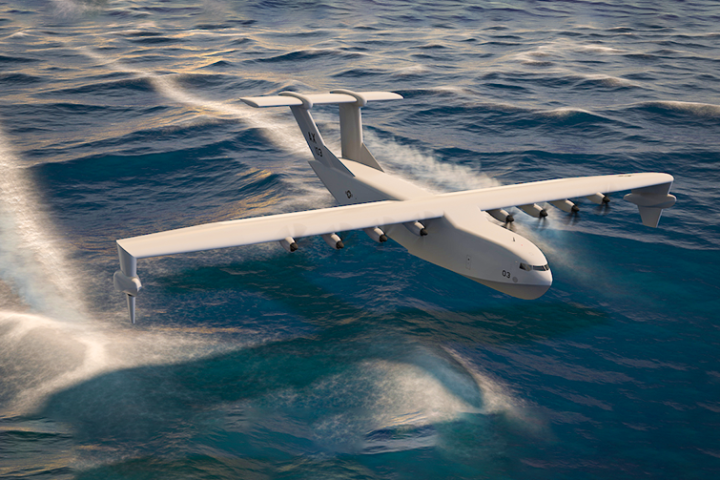
DARPA's ground-effect X-plane will haul 100 tons of cargo
February 01, 2024Aurora Flight Sciences has updated the design of its Liberty Lifter seaborne military heavy-lift transport – a highly efficient X-plane the company is developing for DARPA that achieves bulk lift by using wing-in-ground effect. -
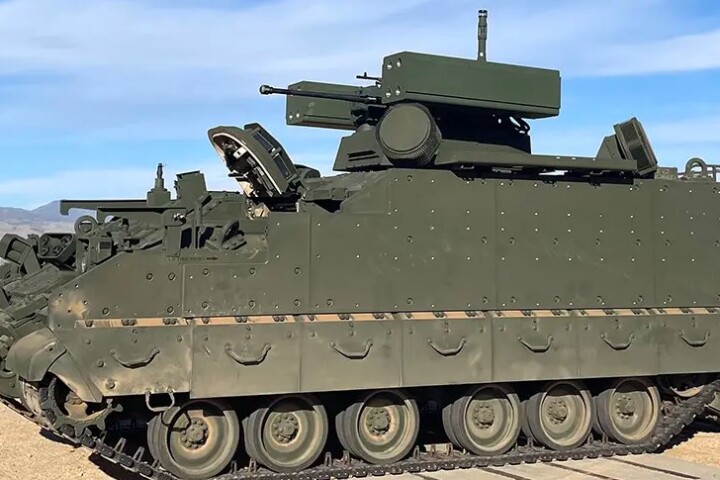
US Army's AMPV armored fighting vehicle takes on drones
January 24, 2024In a recent live-fire field test, BAE Systems' Armored Multi-Purpose Vehicle (AMPV) Counter-Unmanned Aircraft System (C-UAS) prototype took out a small fleet of quadcopter drones in spectacular fashion using a Moog modular weapons system.
Load More