
Scientists selectively shut off mice’s ability to sense cold
By Ben Coxworth
February 19, 2013
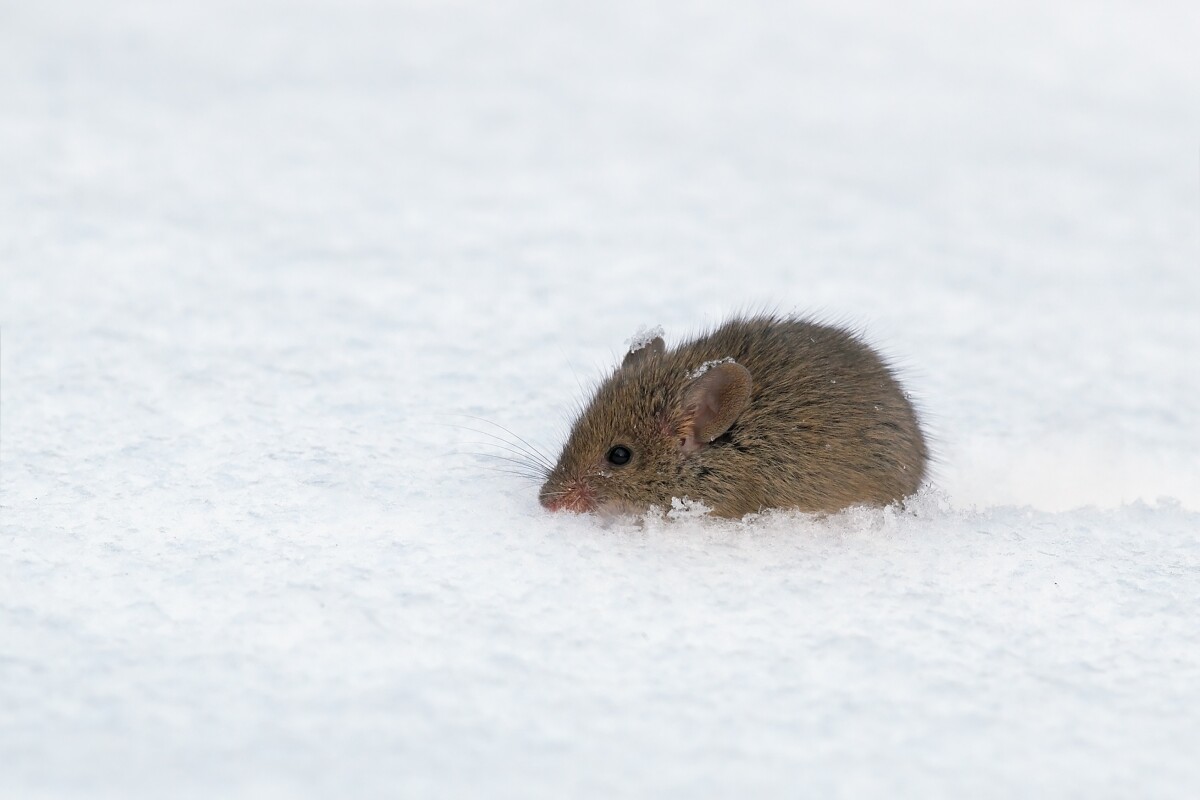
Researchers have disabled the cold sensation in lab mice (Photo: Shutterstock)
How many times have you been shivering on a winter day, and wished that you were capable of simply not feeling the cold? Well, that’s just what scientists at the University of Southern California have done to a group of lab mice – they disabled the animals’ ability to sense cold, while leaving their ability to sense heat and touch intact. It is hoped that the research could lead to more effective pain medications for humans.
The research team, led by associate professor of neurobiology David McKemy, isolated and removed neurons in the mice that express a protein known as TRPM8. This protein is what relays the sensation of cold from the skin.
Those mice were then tested alongside a control group (which still retained their TRPM8 neurons), on a surface where the temperature ranged from 0 to 50ºC (32 to 112ºF). Members of the control group mostly stayed in an area with a temperature of about 30ºC (86ºF), avoiding both hot and cold extremes. The altered mice also avoided the overly-hot areas, but readily wandered into the coldest regions, even when the surface temperature was cold enough to be painful or dangerous.
In other tests that involved the animals’ sense of touch, such as one in which they had to balance on a rotating rod, there was no difference between the two groups.
McKemy and his team are hoping that their findings will help in the development of pain relievers that only affect the pain sensation itself – many existing medications, by contrast, simply leave the patient entirely numb.
A paper on the research was recently published in The Journal of Neuroscience.

Source: University of Southern California
An experienced freelance writer, videographer and television producer, Ben's interest in all forms of innovation is particularly fanatical when it comes to human-powered transportation, film-making gear, environmentally-friendly technologies and anything that's designed to go underwater. He lives in Edmonton, Alberta, where he spends a lot of time going over the handlebars of his mountain bike, hanging out in off-leash parks, and wishing the Pacific Ocean wasn't so far away. All articles by Ben Coxworth
Why don't they figure out how to turn off their desire to eat or reproduce?
ss44220th February, 2013 @ 09:01 am PST
Infra-red vision, now this. Great. They're making super-soldiers and they turn out to be mice.
TJG20th February, 2013 @ 09:21 am PST
Interesting story, but this research was done in 2007. Did Gizmag exist back then?
Ref: Daniels RL, McKemy DD (2007). "Mice left out in the cold: commentary on the phenotype of TRPM8-nulls". Mol Pain 3 (1): 23. doi:10.1186/1744-8069-3-23. PMC 1988789. PMID 17705869
bill20th February, 2013 @ 10:37 am PST
The problem with "turning off" the ability to sense cold, if done incorrectly, is you could freeze to death, which, considering it's a mouse, perhaps we could kill off a lot of mice this way LOL.
Rusty Harris20th February, 2013 @ 07:16 pm PST
Or Login with Facebook:
Just enter your friends and your email address into the form below
For multiple addresses, separate each with a comma
Privacy is safe with us because we have a strict privacy policy.
In colder parts of the world it would be very useful to be able to turn off or turn down the cold.
monkeybrains19th February, 2013 @ 08:36 pm PST