When one thinks of magnetic levitation, or maglev, one generally thinks of insanely fast floating trains or possibly even levitating cans and bottles. Well, scientists are reporting the development of a new use for the technology as an inexpensive sensor for analyzing food, water and other beverages.
Measurements of a substance’s density are important in the food industry, health care and other settings because they provide key information about chemical composition. Density measurements, for instance, can determine the sugar content of soft drinks, the amount of alcohol in wine, or whether irrigation water contains too much salt to use on a farmer's field. Harvard University’s George Whitesides, Ph. D. and colleagues have developed a special sensor that they say is simpler, less expensive and easier to use than devices currently used for making those measurements.
The sensor uses maglev to suspend solid or liquid samples and measure their density. About the size of an ice cube, the sensor consists of a fluid-filled container with magnets at each end positioned with like poles facing each other. Samples of different materials can be placed inside, and measuring the vertical position of the suspended object provides a measure of its density. The scientists showed that the device could quickly estimate the salt content of different water samples and the relative fat content in different kinds of milk, cheese, and peanut butter.
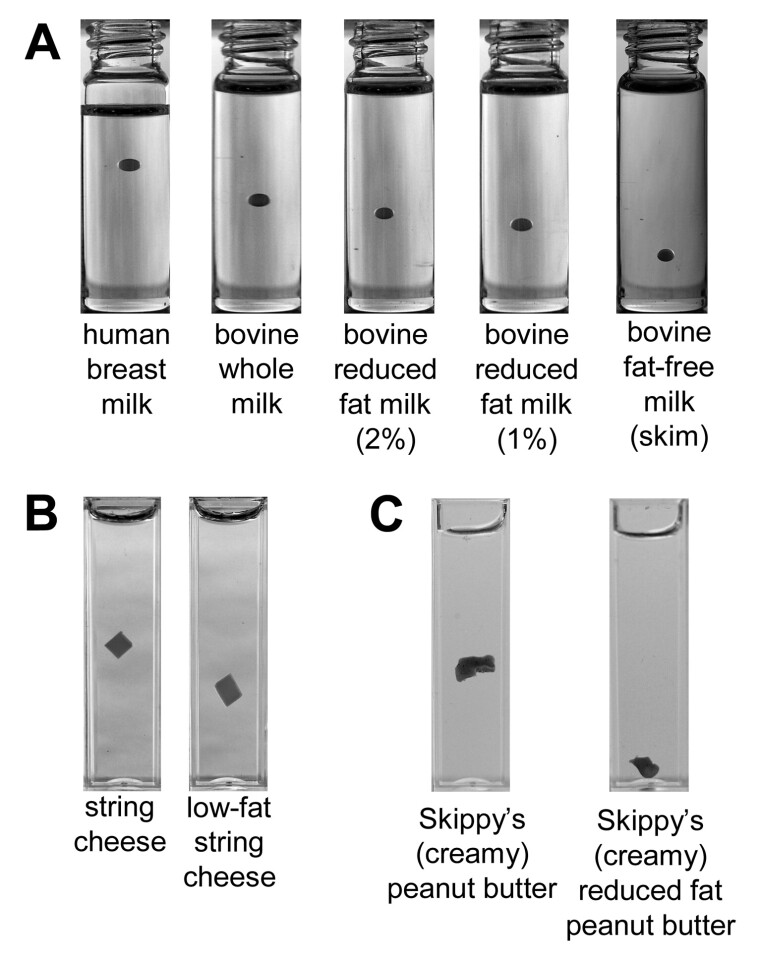
Potential applications of the maglev sensor may include evaluating the suitability of water for drinking or irrigation, assessing the content of fat in foods and beverages, or monitoring processing of grains.
The study, "Magnetic Levitation in the Analysis of Foods and Water,” appears in the Journal of Agricultural and Food Chemistry.