Designers and scientists at the University of Cambridge have been collaborating on a project that demonstrates a potential future application of Biophotovoltaic (BPV) technology. Dubbed the Moss Table, the concept furniture piece was exhibited at this year’s Salone Satellite – a parallel exhibition of young designers that took place during the Milan Design Week last month. The idea behind the table is that energy generated from the moss during the day could be stored in a battery and later used to power the adjoining lamp in the evening. BPV researchers Prof. Christopher Howe, Prof. Alison Smith, Dr. Adrian Fisher and Dr. Petra Cameron collaborated with Dr. James Moultrie of Cambridge University’s Institute for Manufacturing Design in Science project.
The BPV technology is able to generate electricity by tapping into the photosynthesis of living organisms such as cyanobacteria, moss, algae and vascular plants. As the name suggests, the Moss Table incorporates an array of BPV devices which generate electricity from a cluster of moss plants. While the present amount of energy generated by the table is not enough to power the featured table-lamp, it is the envisioned goal of the project. However, the research group was able to illustrate how the same BPV technology is able to power small devices like a digital clock, by applying some of the units that operate inside the Moss Table.
How does it work?
During the process of photosynthesis, the moss releases organic compounds into the soil, which contains bacteria. The bacteria then break down these organic compounds, which they need to survive, liberating a bi-product that includes electrons. These electrons are captured by conductive fibers inside the Moss Table and put to use. The technology therefore harnesses energy which would otherwise be wasted.
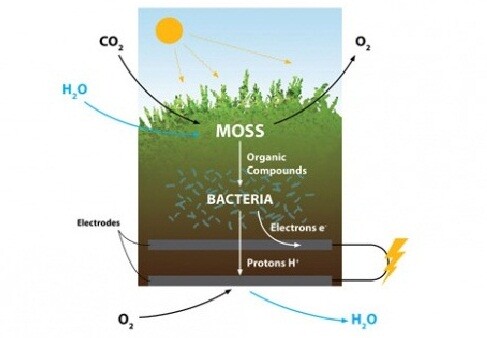
At present the moss application can generate about 50 milliwatts per square meter (10.8 sq ft) and scientists anticipate that future devices may be able to generate up to 3 watts per square meter. With the development of low-energy consumption laptops that could operate at as little as 1 watt (such as the XO-1 by Quanta Computer), it is anticipated that the future Moss Table could power a laptop for over 14 hours. Down the road, the BPV technology could also give rise to a range of self-sustaining organic-synthetic hybrid objects that would meet our daily needs in a clean and environmentally-friendly way.
Music from plants
The Moss Table wasn’t the only exhibit at the Salone Satellite that featured organic plant life. Maltese designer Noel Zahra featured his Koishi concept, which enables users to listen to the music of a plant. “Something that I have always hated was the fact we look at plants and treat them as if they're objects, pieces of furniture almost,” Zahra told Gizmag. “This product proves that even if most of the time plants are stationary, it doesn't mean there isn't any activity [...] within them.”
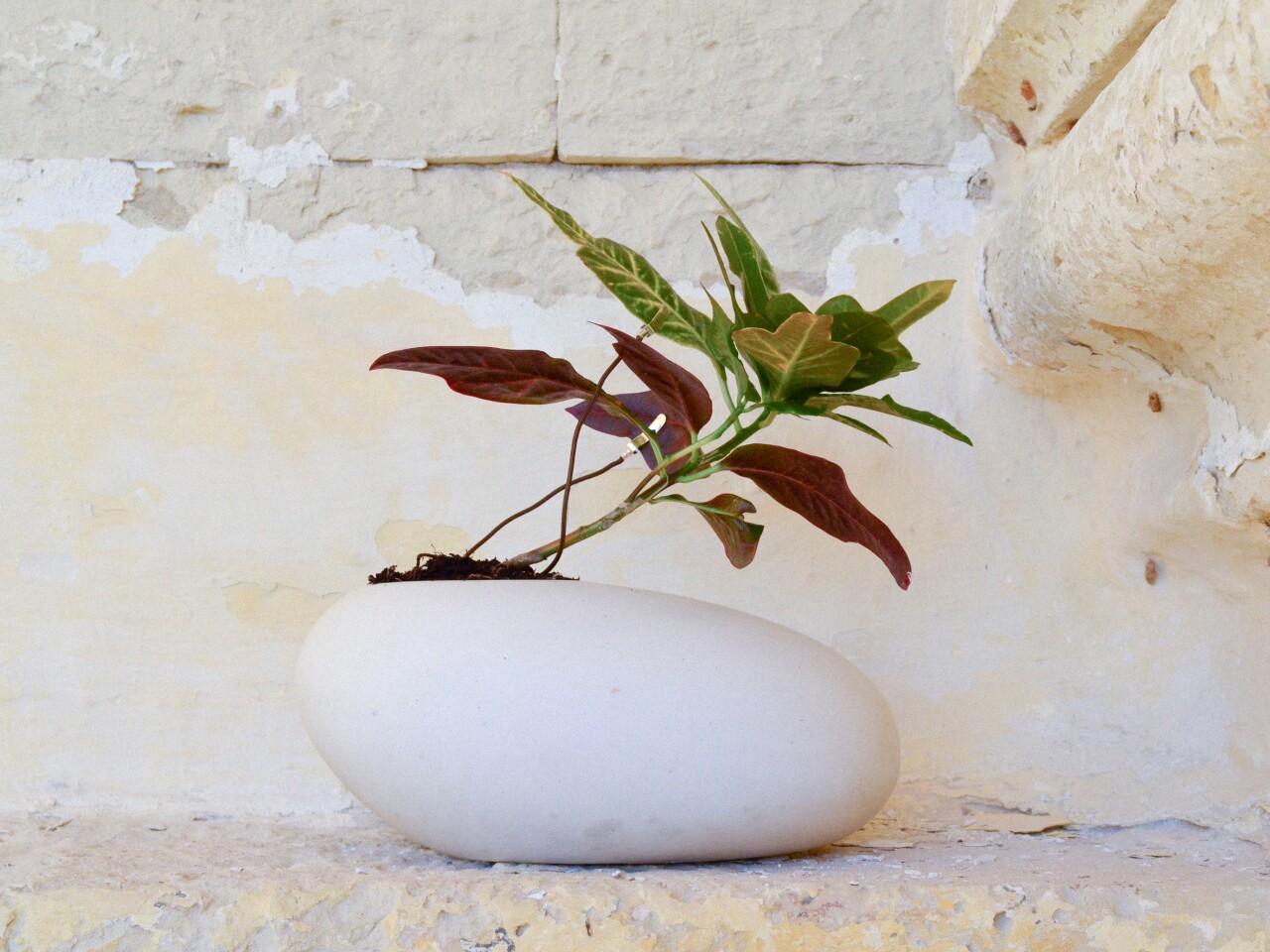
Koishi works by observing the photochemical variances and impulses that are present within the plant, which are then in real time transformed into musical notes. Higher notes are used for stronger impulses and lower notes for weaker ones. Therefore the music played through the plant is produced instantaneously and no two plants can ever sound the same. “It's more than just a pot, it's an instrument; controlled by your plant,” says Zahra. “Imagine cooking to the sound of your basil plant in your kitchen.”
When asked what he would love to create a design for in the future, Zahra simply replied “telepathy" ... and there is no doubt that Gizmag will be the first to let you know if he does!
You can hear what the Koishi plant sounds like in the video below.
Source: Cambridge University and Koishi