If Star Trek has taught us anything, it's the importance of gathering as much information about the alien planet you've just been beamed onto as quickly as possible. To that end, the Science Officer on the away team would perform a quick scan of the surroundings with a handheld, multifunctional sensing device called a Tricorder. Fortunately, we now live in an age where the science fiction of yesteryear is increasingly becoming the science fact of today, and the once futuristic Tricorder is no exception. For his Tricorder Project, Canada's Dr Peter Jansen has designed and built some pocket-friendly devices housing a number of sensors which reveal the secrets of the unseen world around us.
We recently brought you a Tricorder X-PRIZE entry named Scanadu, which aims to take the medical sensing and diagnostic device seen in the hands of Dr Crusher aboard the Starship Enterprise and bring it into the real world. Dr Jansen's focus is on gathering scientific data on otherwise hidden natural phenomena like magnetic fields, humidity and atmospheric pressure, and then displaying the information to the user in a way that doesn't require a PhD to decipher it.
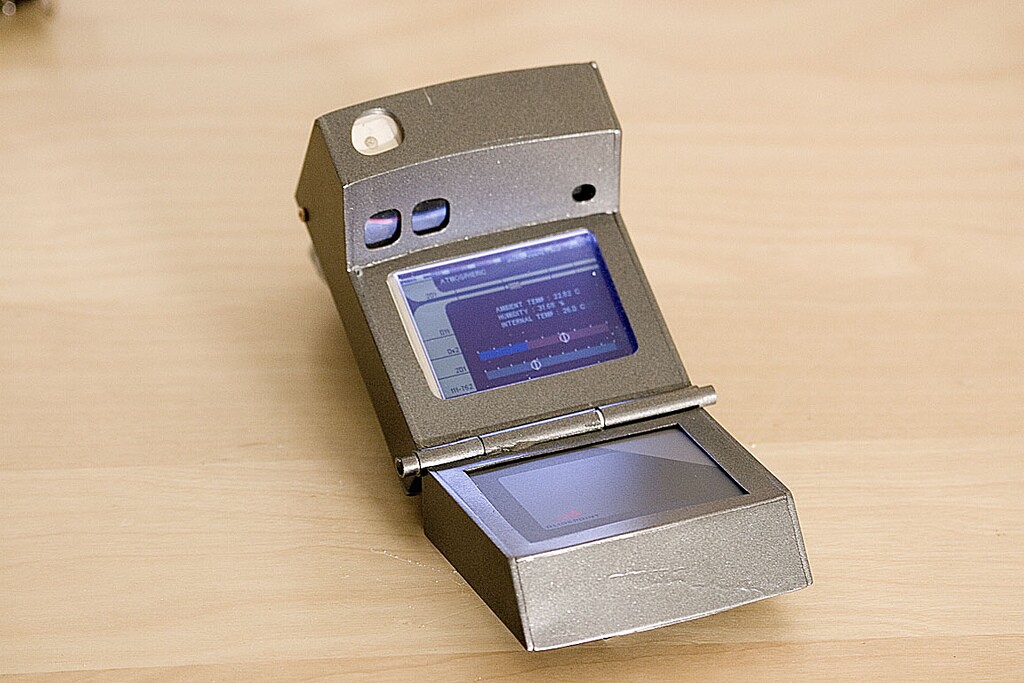
Now progressing into Version 4, Dr Jansen's Science Tricorder began with the aim to get as many different kinds of sensors into one pocket/bag-friendly device as possible, while using off-the-shelf components and making user interaction as simple and intuitive as possible. The array of sensors built into Version 1 included sensors for atmospheric temperature and humidity, magnetic fields, light, temperature, pressure, distance, inertia, and linear polarization, together with a light-to-voltage converter and a GPS receiver.
Development of the first prototype began in April 2007, and it had the outward look of the handheld TR-560 device first seen in Star Trek: The Next Generation rather than the bulky, shoulder slung box from the original TV series - albeit with fewer flashing lights and buttons. The casing was made from sheets of polystyrene that was 2mm thick for the external faces and 1mm thick for the internal surfaces, and the two sections fitted together courtesy of a strategically sliced polystyrene outer tube hinge and an inner tube to act as a floating pin. A flat cable was fed through the hinge to connect the components on each section. There were also a few clear acrylic windows to act as buttons or LEDs.
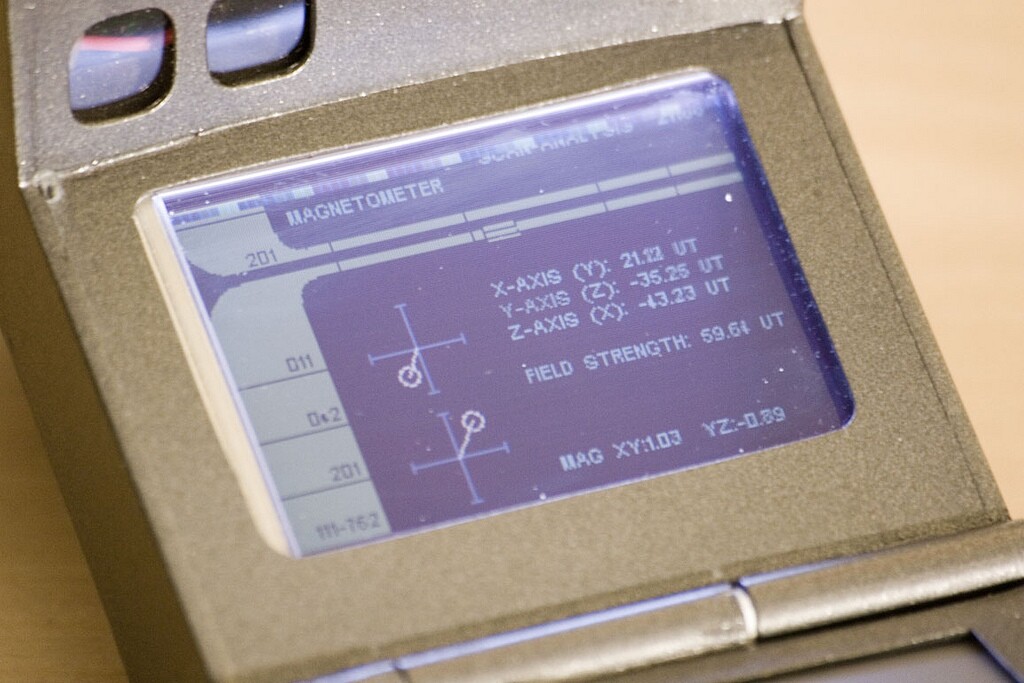
It had a 2.7-inch, 240 x 160 resolution color display made by Sony on the upper section and a laptop-like Cirque touchpad on the bottom. The majority of the processing was undertaken in the upper section, which was also where most of the sensors were located. It was powered by six rechargeable AAA-sized batteries housed in the bottom section and featured an SD media card slot. Total build cost was around US$500.
With a working Science Tricorder in the bag, Dr Jansen started work on a significantly improved model in August 2008. Version 2 featured ten sensing modes spread over three categories - atmospheric, electromagnetic, and spatial. While similar to those used for Mark I, the designer took the opportunity to upgrade sensors where possible - including throwing a cellphone camera into the mix - and made it a might easier to install new sensors on the unit's single sensor board.
Mark II was given a processor boost with the inclusion of an ARM processor capable of running the Linux OS, and the sensor board was treated to a co-processor of its very own. The display and the user interface area were both upgraded to a resistive touchscreen, 2.8-inch OLED display at 320 x 240 resolution and with a 16-bit color depth. The heavy and space-hogging AAA batteries were shown the door and a 3.7V/1000mAh Lithium-Polymer powerhouse invited to the party instead.
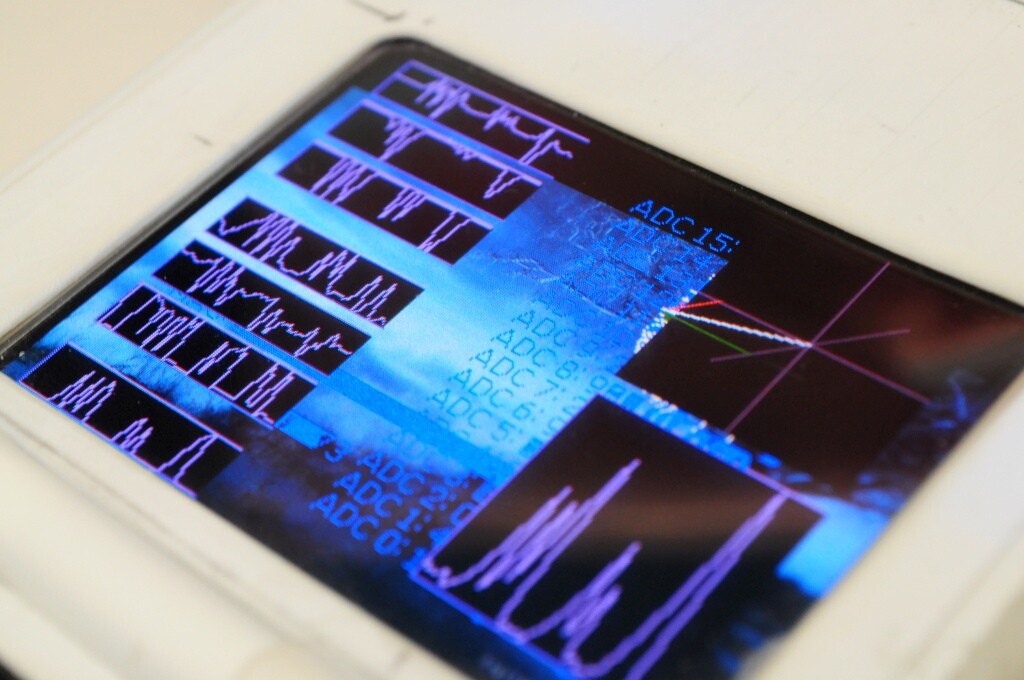
The second generation Tricorder also featured 32MB of onboard memory and 8MB of dataflash for boot, two USB ports - one to cater for device interconnectivity (such as an 802.11b wireless adapter or a memory stick) and the other a device port that acts as a serial console - and a MicroSD slot.
The unit's outer shell was still made from polystyrene sheets and the two sections were still hinged together using two polystyrene tubes, although the two small flat flex cables used to connect the components in Version 1 were replaced by a single, wide flat flex cable and there was no painting of the unit this time. The latter decision meant that when the unit's LED lights activated, the semi-transparent polystyrene would also change color. Mark II's overall thickness was reduced from 1.8 inches (46 mm) to 1.37 inches (35 mm).
Dr Jansen started work on the third version of his Tricorder mid-2010, but it was subsequently abandoned early the following year as the designer felt that it departed from the project's original philosophy of gathering together "a large array of inexpensive sensors with facilities for intuitive graphical visualization."
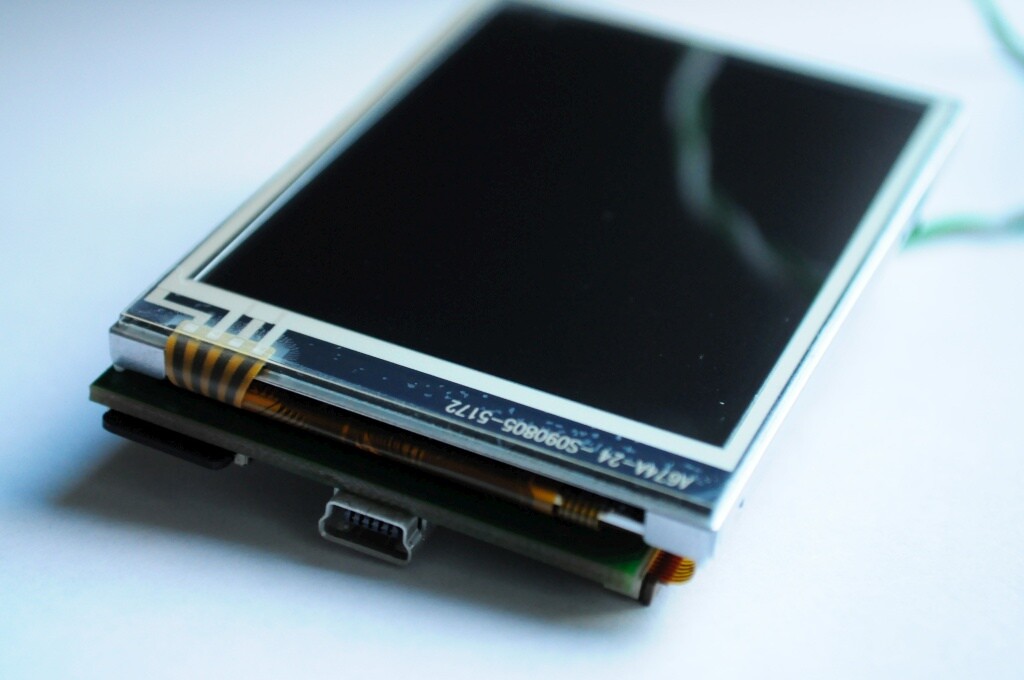
With the current version now in progress, Dr Jansen hopes to further reduce build cost without sacrificing the user's visual experience. It's reported to be undergoing software development at the time of writing.
If you feel inspired enough to have a go at building your very own Tricorder, the source code, detailed component lists and build instructions for the Mark I and II models are available online (see source link).
Source: Tricorder Project via Ars Technica