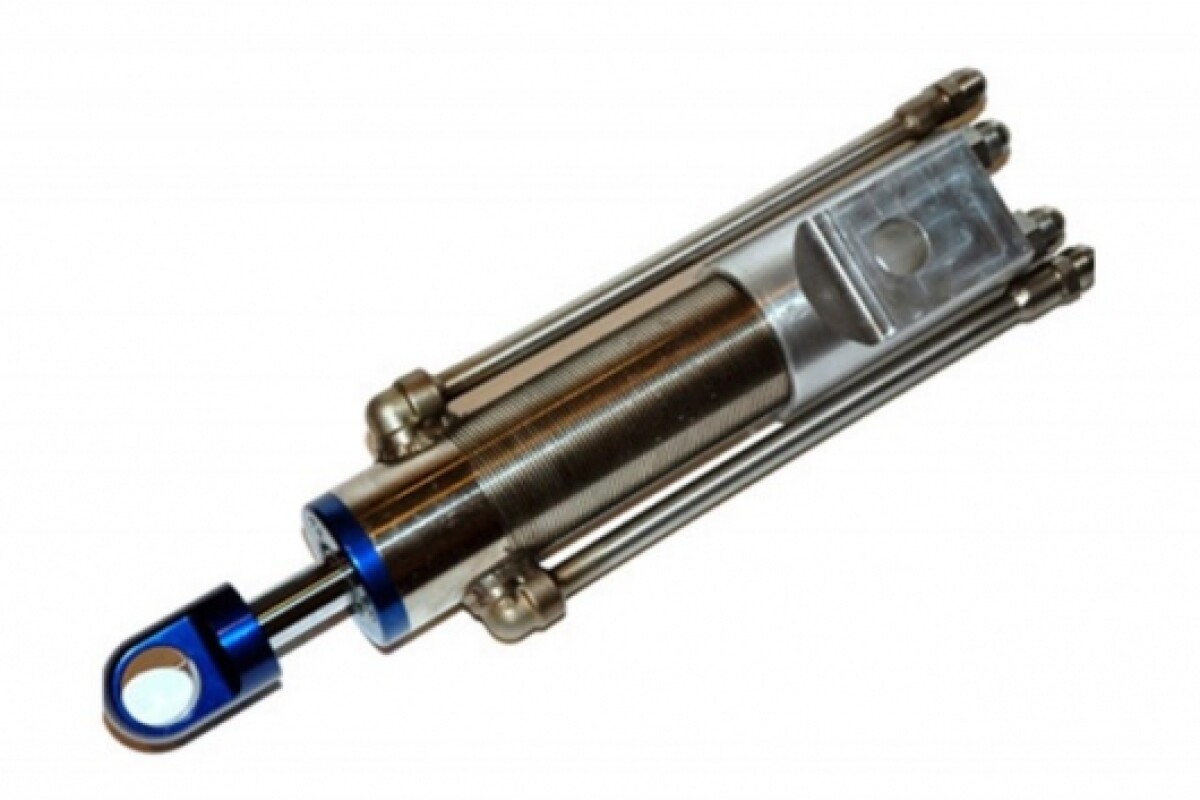



February 13, 2009 We reported recently on several new methods of regeneration for hybrid vehicles. These included regenerative shocks based on electric motors and a hydraulic drive train. Now students at MIT have developed a regenerative shock absorber that is a cross between those two.
The MIT regenerative system is based around a hydraulic ram the replaces a standard shock absorber where the up and down movement of the suspension drives an external hydraulic motor, which in turn drives an electrical generator. The students say they can produce up to a 10 percent improvement in overall vehicle fuel efficiency by using the regenerative shock absorbers. The system is controlled by an active electronic system that optimizes the damping, providing a smoother ride than conventional shocks while generating electricity to recharge the batteries or operate electrical equipment.
In their testing so far, the students found that in a heavy truck, each shock absorber could generate up to an average of 1 Kw on a standard road. That is enough power to completely displace the large alternator load in heavy trucks and military vehicles, and in some cases even run accessory devices such as hybrid trailer refrigeration units. The students filed for a patent last year and formed a company, called Levant Power Corp., to develop and commercialize the product and they are currently doing a series of tests with their converted Humvee to optimize the system's efficiency.
The new shocks also have a fail-safe feature: If the electronics fail for any reason, the system simply acts like a regular shock absorber. The students plan to have a final, fine-tuned version of the device ready this summer. Then they will start talking to potential big customers who stand to gain significant benefits from the technology. For example, they have calculated that a company such as Wal-Mart could save $13 million a year in fuel costs by converting its fleet of trucks.
Paul Evans
Via: MIT news.