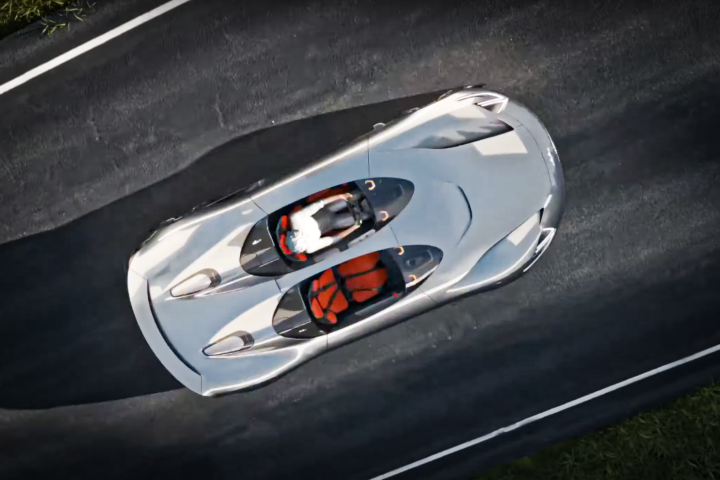
June 7, 2007 Porsche enhanced its already considerable reputation yesterday by once again being awarded the number-one nameplate in the J.D. Power and Associates Initial Quality Study (IQS). The IQS measures new-vehicle quality at 90 days of ownership. It captures quality of design and quality of production (defects and malfunctions) problems experienced by owners using a problems-per-100 vehicles (PP100) metric and it’s the results of surveying a whopping 97,000 purchasers and lessees. The study includes quality comparisons by manufacturer, assembly plant, model, and platform. Porsche ranked number one for the second year running, ahead of Lexus, Lincoln, Honda and Mercedes-Benz. Honda, with the fewest problems per 100 among non-premium brands, improved from sixth since the 2006 study.
Mercedes-Benz and Toyota models capture three segment awards each. Toyota models that receive awards are the 4Runner, Sequoia and Tacoma. Mercedes-Benz models that earn awards are the E-Class, SL-Class, and the S-Class. The S-Class ties with the Audi A8 (total) for having the fewest quality problems in the industry, with just 72 problems per 100 vehicles.
Porsche averaged just 91 problems per 100 vehicles, well under the industry average of 125 problems per 100 vehicles.
“The Boxster’s exceptional IQS showing is a testament of its attractive design and outstanding performance,” noted Schwarzenbauer. “As we continue our commitment to excellence and quality as a brand, we expect the Boxster to remain the most popular compact premium sporty car among consumers.”
Ford was the biggest winner in the mass market categories, with five top model segment awards—for the Ford Mustang, Lincoln Mark LT, Lincoln MKZ, Mazda MX-5 Miata and Mercury Milan.
“The 2007 IQS results contain some encouraging and positive news for Ford Motor Company,” said Neal Oddes, director of product research and analysis at J.D. Power and Associates. “Fourteen Ford Motor Company models place in the top three of their respective segments—an achievement unmatched by any other corporation this year—which is a testament to the improvement in quality for Ford Motor Company vehicle models and plants. In addition, their Lincoln nameplate, which receives two segment awards, improves considerably to rank third in 2007, from 12th in 2006.”
The Initial Quality Study serves as the industry benchmark for new-vehicle quality measured at 90 days of ownership and captures problems experienced by owners in two distinct categories—quality of design and quality of production (defects and malfunctions). Over the past 20 years, the automotive industry has improved in quality at the rate of 6 percent per year on average—a 20-year improvement rate of more than 120 percent. In addition, the study has found that the automotive industry has reduced problem counts by 50 percent every 7 to 8 years.
The study finds that vehicle redesigns and product launches create quality challenges for manufacturers as they continue to develop and introduce new and advanced automotive technologies. On average, a vehicle redesign increases problem counts by 10 problems per 100 (PP100) vehicles.
“Ideally, manufacturers should aim to achieve high initial quality when launching a new model, since this builds a strong foundation for future years and can become a differentiating factor relative to the competition,” said Oddes. “One year after launch, initial quality begins to improve by an average of 7 PP100. If a model launches with lower initial quality, it is more difficult for the manufacturer to keep pace with the competition over time.”
2007 IQS Ranking Highlights
Mercedes-Benz and Toyota models capture three segment awards each. Toyota models that receive awards are the 4Runner, Sequoia and Tacoma. Mercedes-Benz models that earn awards are the E-Class, SL-Class, and the S-Class. The S-Class ties with the Audi A8 (total) for having the fewest quality problems in the industry, with just 72 problems per 100 vehicles.
“Mercedes-Benz shows dramatic improvement, particularly with its newly-redesigned S-Class, which improves 63 PP100,” said Oddes. “Overall, Mercedes-Benz improves its nameplate rank by 20 positions—the greatest rank increase of any nameplate in the study. All Mercedes-Benz models in the study improved substantially, and the breadth and speed of these improvements demonstrates the Mercedes-Benz commitment to quality.”
For the second consecutive year, Porsche tops the overall nameplate rankings, averaging 91 PP100. Following in the rankings are Lexus, Lincoln, Honda and Mercedes-Benz, respectively. Honda, with the fewest problems per 100 among non-premium brands, improves in the ranking to fourth from sixth since the 2006 study and earns awards with the Civic and CR-V. Among non-premium brands, Kia posts the largest improvement in ranking, moving from 24th in 2006 to 12th in 2007 and earning an award for the Kia Rio/Rio5 for the second year in a row.
The most improved nameplates in the study are Land Rover (increasing in initial quality by 34 PP100), Saab (improving by 30 PP100) and Mercedes-Benz (increasing by 28 PP100).
Other nameplates receiving model awards in 2007 include Chevrolet (Express and Silverado Classic HD), Lexus (RX350/RX400h) Pontiac (Grand Prix) and Porsche (Boxster).
Assembly Plant Awards
For the first time since 1999, a North American assembly plant receives the Platinum Plant Quality Award for producing vehicles yielding the fewest defects. Ford Motor Company’s Wixom assembly plant in Michigan, which produced the Lincoln Town Car, averages just 35 PP100. Plant awards are based solely on defect counts.
Among other North and South American plants, the General Motors Oshawa 2 plant in Ontario, Canada, which produces the Buick LaCrosse and Pontiac Grand Prix, receives the Silver Plant Quality Award. American Honda’s East Liberty, Ohio, plant, which produces the Honda Civic Sedan and Honda Element, earns the Bronze Plant Quality Award.
In the Asia Pacific region, Toyota’s Kyushu, Japan, plant, which produces the Lexus ES 350, Lexus IS 250/IS 350, Lexus RX 350, Lexus RX 400h and Toyota Highlander/Highlander Hybrid receives the Gold Plant Quality Award. Toyota’s Fujimatsu, Japan, plant, which produces the Toyota Prius, earns the Silver Plant Quality Award. American Honda’s Sayama, Japan, and Suzuka, Japan, plants tie for the Bronze Plant Quality Award. The Sayama plant produces the Acura RL, Acura TSX, Honda Accord Sedan/Hybrid Sedan and Honda CR-V. The Suzuka plant produces the Honda Civic Sedan/Hybrid Sedan, Fit and S2000.
BMW’s Regensburg, Germany, plant, which produces the BMW 3-Series Coupe and 3-Series Sedan, receives the Gold Plant Quality Award for Europe. Earning the Silver Quality Plant Award is the Mercedes-Benz Sindelfingen, Germany, plant, which produces the Mercedes-Benz C-Class, CL-Class, CLS-Class, E-Class Sedan, E-Class Wagon, and S-Class. Audi’s Neckarsulm, Germany, plant, which produces the Audi A6 Avant, A6 Sedan, A8 Sedan, RS 4 Sedan, S6 Sedan and S8 Sedan, receives the Bronze Plant Quality Award.
The 2007 Initial Quality Study is based on responses from more than 97,000 purchasers and lessees of new 2007 model-year cars and trucks surveyed after 90 days of ownership. The study is based on a 228-question battery designed to provide manufacturers with information to facilitate problem determination and drive product improvement.