
Laptops
Read news, reviews and comparisons of the best laptops on the market.
Latest News
-

2024 Macbook Air gets M3 chip – and serious performance upgrades
March 04, 2024Apple has treated its most popular portable workstation to a significant performance boost thanks to building the new 13-inch and 15-inch MacBook Air laptops around its latest silicon, the M3 chip announced last year. -

First transparent laptop shows Lenovo's clear vision for future working
March 03, 2024Lenovo has unveiled a ThinkBook concept that boasts a futuristic transparent display and combined touch keyboard/drawing pad. The concept is part of the company's new tech offerings announced at Mobile World Congress in Barcelona this week. -

Dual-OLED Zenbook Duo laptop now available for pre-order
January 31, 2024Asus launched what it called "the world's first 14-inch dual-screen OLED laptop" at CES 2024 earlier this month, a similar but different proposition to its 17-inch folding model from 2022. Now the Zenbook Duo has gone up for sale. -

Lenovo teases laptop concept with animated color E Ink top
January 12, 2024That Lenovo launched a bunch of new laptops at CES 2024 is hardly surprising, but one of those new models has been transformed into a proof-of-concept that rocks an animated color E Ink outer lid. -

Tadpole hatches as a tiny webcam specifically designed for laptops
November 16, 2023Most laptops and Macbooks come with a webcam built in, but they can leave video-chatters somewhat wanting in terms of performance and image quality. Newcomer Opal Camera has addressed such things with a small-but-powerful model called the Tadpole. -

Google aims for a better class of Chromebook with new Plus category
October 02, 2023More than a decade since the first low-powered but fuss-free, easy-to-use, inexpensive laptops running Chrome OS were launched, Google has now announced the Chromebook Plus program – a new performance-focused category with built-in AI. -
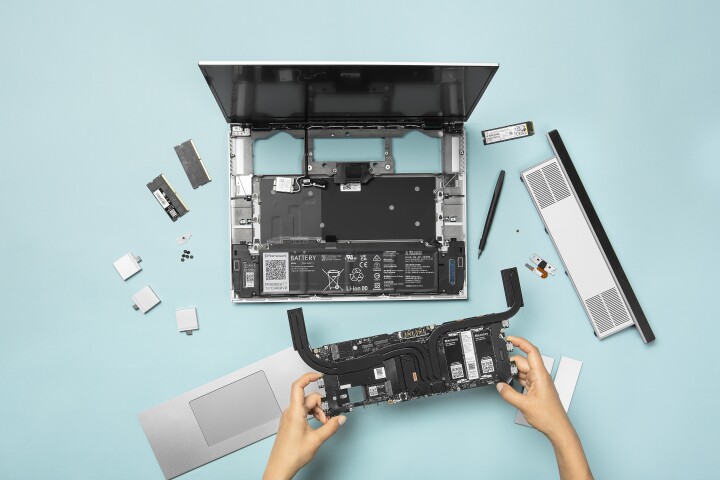
Framework goes all in on AMD for modular, user-repairable Laptop 16
July 19, 2023The 16-inch version of the customizable, repairable and upgradeable laptop announced by California tech startup Framework back in March has now gone up for pre-order, with Ryzen silicon and Radeon graphics leading the component charge. -

Spacetop AR laptop puts the screen on your face
May 19, 2023Seeking to free laptop users from small displays that limit functionality, Sightful has unveiled a laptop with no screen. Instead, AR glasses project a 100-inch virtual screen anywhere, transforming any space into a screen-filled portable office. -
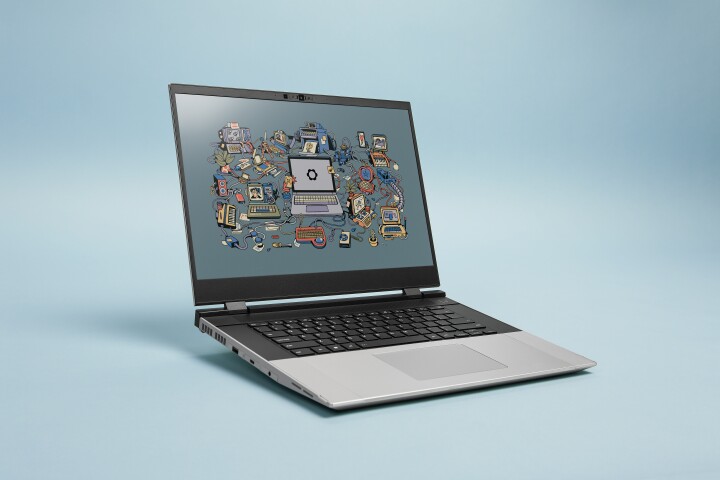
Framework previews modular gaming laptop with upgradeable GPU
March 24, 2023Back in early 2021, a Californian startup revealed plans to launch a 13-inch laptop that users could upgrade, repair and customize. Now the company is about to launch the Framework Laptop 16, which will allow users to upgrade discrete graphics. -

Acer sheds the pounds for world's lightest 16-inch OLED laptop
October 07, 2022As I know from painful experience, hauling a heavy brick of a laptop around on work assignments can be an energy zapping strain. Acer's Swift Edge model could help, launching as the lightest 16-inch OLED laptop in the world. -

Framework partners with Google for upgradable and repairable Chromebook
September 22, 2022Back in early 2021, a Californian startup launched a 13.5-inch laptop designed for easy upgrade and repair by the user. The Framework Laptop has since been updated, and now the company has expanded the idea into Chromebook territory. -

Lenovo treats latest business laptop to handy secondary touchscreen
September 14, 2022For the 2nd-gen ThinkBook Plus laptop, Lenovo added an E Ink outer display to complement the main screen. The company has also treated the latest model to an extra display, but this time the 8-inch screen is positioned to the right of the keyboard. -

Lenovo's folding OLED laptop gets significant display and power bump
September 06, 2022Foldable phones offer a mini tablet display experience in a device that can fit it a pocket. Lenovo brought the same flexibility to the laptop in 2020 with the ThinkPad X1 Fold, and now the bigger and better second generation has been revealed. -

Acer cooks sustainability and repairability into durable Chromebook
August 24, 2022Consumer electronics giant Acer has released a new Chromebook that could have you turning a little green – not with envy, but in an eco-friendly sense. The Vero 514 makes use of recycled and recyclable materials, while also embracing repairability. -

Getac's latest laptops built to survive the harshest field conditions
June 20, 2022Getac has added two new additions to its family of rugged mobile workstations, both built to survive extreme operational conditions faced by defense personnel, in transport and logistics operations and field work in the energy industries.
Load More