May 16, 2007 On-the-fly physiological monitoring of athletes is developing to a stage where an elite sports coaching box is looking more and more like a Formula One garage, each player being constantly monitored to ensure maximum performance while avoiding injuries. Speed and conditioning expert Dr Adrian Faccione, founder of GPSports talks to us about the cutting edge of elite athlete management, and the amazing future technologies that are now in development. The original MP3 of the interview with Dr Adrian Faccione is available here.
GPSports has been working with a number of elite sporting clubs for around 18 months now, providing their SPI ELITE physiological and GPS monitoring devices to a number of Australian Rules Football (AFL) teams, top-level soccer teams and rugby teams as well as police, military and firefighting units.
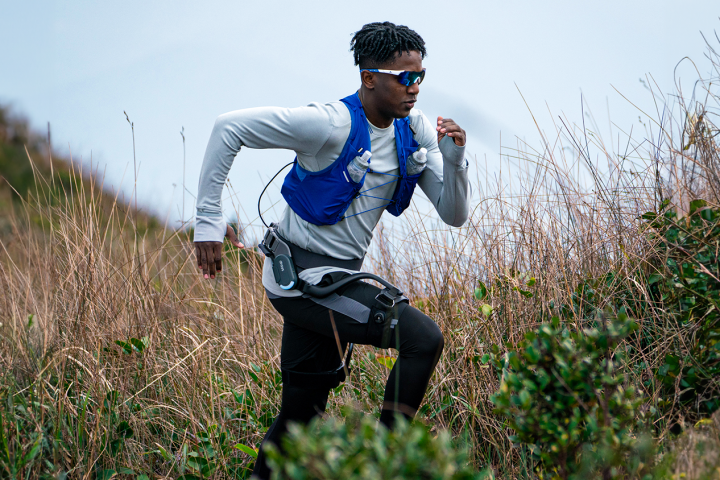
The GPS-enabled devices are strapped to individual players throughout a game or training session, and measure a number of metrics over time. GPSports founder and fitness training expert Adrian Faccione explains: "We get position, we get speed, we get distance, we get heart rate, we get impacts from when an athlete runs into another athlete. We collate all the impacts, large and small, and we come up with what we call "body load" - which is basically the total physiological stress placed upon the body with all the accelerations and decelerations that take place in a training session or game.
"We have this being used in Rugby union now. We have a number of clubs that are now looking at scrums and the impacts when the scrums first engage with their opponent, and looking at where the major stresses are taking place, and making sure they have the most appropriate athletes applying the appropriate forces at that point of impact.
"We have some other groups that are basing a large amount of their weekly training volumes on total body load output. So, how much work are they doing, and they can then pull an athlete up when they have achieved a certain amount, knowing that if they go beyond that amount of training they get the re-occurrence of old injuries."
Moving to real-time wireless data collection
The SPI ELITE units have until now required a USB connection to download their data onto a PC for analysis. In the next couple of weeks, however, GPSports is aiming to release their WiSPI wireless unit to allow real-time, on-the-fly monitoring of stresses and body load.
"With WiSPI we're able to stream the data in real-time." says Faccione, "We've got very reliable 200-metre outputs. We've even been able to stream the data over 1.3 kilometres in a straight line, which is not bad. The units are the same size as the SPI Elite, and you put them on and it streams the data real-time back to a laptop or PC with an antenna attached to it. We have a number of different screens that allow you to see the data in real time.
"The real power of this is that you'll be able to set upper and lower limits for a range of different variables for an athlete. For instance you might say "I want this athlete to run no more than 10km in a game. So as it gets close to that we've got a dashboard that shows he's getting close. Or you might set an upper limit on heart rate, and if it gets above 180 we want to know, and the machine goes 'ping' when it does that.
"An interesting application will be, you will now be able to set minimum quantities of work that the player must achieve before a training session is over, so rather than base it on time now, you base it on volume.
"That's a mind set that will take coaches some time to get used to."
The devices should also prove useful in rehabilitation training for players with injuries: "I'll be in the UK on Monday meeting up with the Chelsea Football Club... They're particularly using our gear from a rehabilitation perspective for players coming back from say a hamstring or groin injury. They're using our current non-real-time device, the SPI Elite, and analysing the data straight after training, making sure the athlete's progression back to full intensity is slow and at a rate that won't get them further injured. I'm hoping to show them our real-time system which will allow them to do it every single run rather than at the end of a session - which hopefully they will see will be of huge value in terms of the rehabilitation process."
Real-time data display
With all this information now available to coaches, the next step is using it visually, both to enhance a coach's understanding of the new data, and to provide TV stations with new statistics and information they can show to the viewer. Enter GPSports' EyeSPI video software, to be released at the same time as the WiSPI unit.
"EyeSPI is purely a software package," explains Faccione, "If you have any of our devices, and you take some video, then you can synchronise the GPS data and the video data so you can hit play on this screen and basically see the video taking place but then have an outline of the field they're on and seeing all the positions and seeing them actualy running around.
"You can have a look at all of the data that's spitting out while the training or game is taking place, so, speeds and heartrates, and distances, and body loads and those things, as well as being able to select any point in time during the game... If a particular event took place, and this player seemed to be out of place you can go back and look at the GPS and say 'ah, look at this, they were way down here when they should have been up here.'
"So we start to look at this technology from less of a physiological angle, and more from a tactical, which is going to make it more useful for the actual coaches."
Dealing with the privacy issue
While it's clear that any elite sports team would gain significant advantage from the use of this sort of technology, Faccione has found the concept has met some resistance. He anticipates that many teams might have an issue with making such detailed physiological and positional data available to the media and opposition teams: "For us that's something that needs to be discussed between the clubs and the broadcasters.
"At the moment, the statistics companies that are out there anyway supply the data to all the clubs... so it's quite an even playing field, even though they like to think they've got secrets from everyone else. Doing smart things with the analysis during training, that's where the difference takes place. As I said, any club can get really advanced statistics and details about their opponent prior to playing them.
"That's exactly what happened with the Broncos and Melbourne Storm last year. The Broncos did some great analysis on what the Storm's were good at and not good at, and went into the grand final and ended up winning quite easily, and that was based on statistics they had access to.
"All we want to do is now offer some other information that's going to allow them to make even better decisions about whether a player should or shouldn't stay on the field or be swapped or substituted for a fresher player.
"We'd like to say that we think this will actually lead to better safety for players. Our technology could potentially be able to tell if a player started to run out of steam, started to have an imbalance of one sort or another with a leg that might lead to a particular injury.... If a player had really maxed out with their heart rate; there's a whole range of things we can stream back to ensure that a player stays safe and well rather than being out on the field until such a time as they get themselves injured.
"This will allow people to stay elite athletes for a lot longer. Already you can see the average age of a football player. 20 years ago it used to be early 20s, now now it's late 20s, early 30s. And we'll soon see that through advances in better monitoring players will be able to stay in the sport into their late 30s and early 40s. All the physiology tells you that players don't need to lose anything into their late 30s and into their 40s.
"What generally stops them is that they get too injured and too broken down due to incorrect training patterns and methods, and they have to drop out of the sport from injury. If you can keep them relatively injury free, their careers can be longer. I think we'll see athletes getting older and older as well, which is not a bad thing."
The next step: pattern recognition to tell us what sets special athletes apart
GPSports is starting research in the field of pattern recognition, which opens up some very exciting possibilties. "We're actually doing some stuff, pattern recognition with the accelerometer, particularly with racehorses," says Faccione. "And it's early stages, but symmetry in a racehorse is really important, and if you're at one of these stockyards trying to buy one of these horses and pay a large amount of money, you're not alowed to ride them, you're not allowed to race them. You're allowed to trot them up and down a short distance and that's all you can do.
"We currently can put one of our units on a horse and trot it up and back, and see how symmetrical it is from left to right, front to back. It's early stages yet, but this could potentially become a really important factor in whether a horse is going to stay solid and uninjured when it races on a regular basis.
"That pattern recognition is something we're looking at applying to athletes - and also to non-athletes as well in a couple of different environments.
"The accelerometer, these are really tiny little devices, so we may think about developing four or six really tiny accelerometer sensors that you put onto the wrists and ankles and knees and elbows, and that then stream data short-range back to the centralised unit which you may be wearing on your back, and that then streams that back to the sideline. That's something we may look at in the next 12 to 18 months. So you have a 3-D image of how your player is doing things. You can start to get technical and say 'did they do that right under pressure,' for instance.
"As an athlete starts to get tired, their patterns change, and a change in pattern can then lead to injury. If we're able to real-time measure that a player's kicking pattern, running pattern is changing as they get fatigued, then that's really valuable for the coaches to know, because they can say 'well we know in the past, when this player gets tired their running chances, and when their running changes they can overload a hamstring - and they have a hamstring injury... Then let's pull them off right now before they get to that point. That's something we're working on pretty solidly this year."
On-the-fly blood analysis
"Ultimately in the future, we'll be able to add more physiological analysis, in particular blood analysis," says Faccione, "which will be a pretty amazing development. Lactose, glucose, pH, those sorts of things. So say with glucose, straight away you could apply that to a diabetic on the street, or to a super-elite athlete that's doing an endurance event."
Real-time monitoring of blood glucose, lactic acid and pH are already on the drawing board, as are some other interesting ideas: "There's a thing called creatine kinase, and that's a measure of how much muscle damage is being done so if you go into a gym and do a really hard workout, what happens is you get muscle breakdown, and one of the outputs of that is creatine kinase. So before you do your next session you can know exactly what your levels are at - we'll be able to totally determine how hard, or if you should in fact train at all, for a particular modality."
"Let's say you could measure testosterone. You want to get strong in the gym. When's the best time to train? When your testosterone levels are highest. So if you had a device or some clothing that could tell you when your testosterone levels are at their highest, that would be the time when you should train. You might find that your testosterone levels are at their highest at 3 o'clock in the afternoon. If you are able to train at 3, that would be the best time to gain maximum strength."
"We really don't know what's the best time to train an athlete. Everyone trains at the same time. We're gonna meet at 4 o'clock in the afternoon and do a training session. That might not suit everybody. That might not suit ANYBODY - but we do it because it suits us in terms of the timing of our day. Are you recovered enough from yesterday's training to do a maximal speed session today? We have no idea until the session is over, and at that stage we can do a comparison - but at that stage it may be too late.
"As soon as we can measure this sort of information more closely to real time, it will totally change when a player trains, how they train, how much they train, how intensely they train, how often they train, how much recovery they need. All these things are still in baby stages, we're going to see huge changes in the next five years.
Consumer-level applications
While the company is currently focused on elite sports and regimented training, Adrian can see the technology filtering through to the consumer market soon afterwards: "We're currently talking to a health club franchise here in Australia to offer some devices that will allow people to wear these devices all the time - and they'll be able to do total calorie counts for the week, that sort of thing that will allow them to get better results on whatever they're trying to achieve - lose weight, gain weight, get fit, whatever that might be. In terms of that sub-elite, consumer, corporate area that's something we're looking at.
The company now offers a GPS-based non-elite personal unit and Faccione sees the potential for more development in that area. "We're looking into some areas that are less sport-oriented and more health and fitness oriented, which could broaden our market."
"Thinking purely conceptually now, potentially having little belts that everyone wears. So you go out into the bush on a group mountain bike ride. Everyone's internet connected, so if somebody drops off the back and starts to run out of steam a little bit, the rest of the group takes off, you don't know exactly where to go. But because everyone's location data is being streamed back to you to this belt, the belt is actually vibrating left and right, forward and back to tell you which directions to go, so you know exactly where the group is, even if you can't see them. I think we'll see more of that group social interaction stuff down the track."
And then there's the exciting possibility of integrating the pattern recognition research they're doing with futuristic clothing to produce next-gen sports clothing that can teach you how to play a sport: "We're looking at getting to a point where clothing can start to give the athletes feedback. You could build in, for instance, motor patterns to learn how to do something. So you want to learn a particular golf swing, you'll wear this bit of clothing, and the clothing will actually be tight and loose as it forces you into the right positions, so you can dramatically speed up how fast you learn new skills. Think about that application in all movement activities. Clothing that teaches you how to have a good golf swing."
Contacting GPSports
The company welcomes approaches from elite-level outdoor team sports clubs, as well as the horseracing industry, the auto racing industry, and the emergency services and military who all stand to benefit from a better understanding of the physiology involved in sports and intense training.
Keep an eye on GPSports, they are driving a global revolution in terms of the way top athletes are managed for maximum performance.