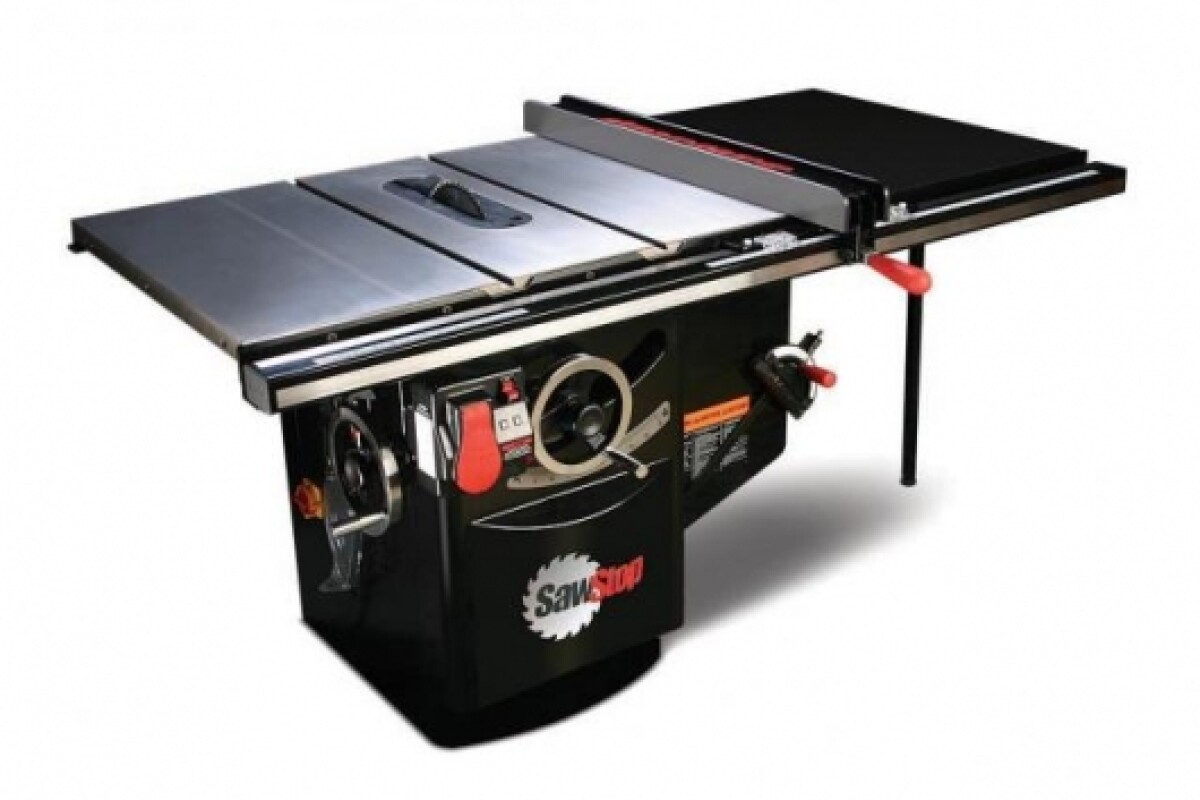



May 7, 2007 A small Oregon company is changing woodworking professionals’ jobs with a table saw that only cuts wood – not fingers. SawStop has invented a table saw that immediately retracts the blade when it touches a finger, making woodworking safer and eliminating painful and very costly medical procedures. When the blade touches a finger (or something else that conducts electrical current), the current drops and engages a brake. As the blade’s teeth sink into the brake, the momentum forces the blade to drop below the table. The entire process takes only three milliseconds, which is a fraction of the time it takes to blink your eye. Video here.
Table saws are involved in more than 60,000 accidents every year in the United States alone – or one accident every nine minutes – according to the U.S. Consumer Product Safety Commission. Those accidents result in nearly US$2 billion of injury-related costs annually. Realizing the need for a safer saw, lifelong woodworker Steve Gass applied his doctorate in physics to design a saw that runs with a small electrical current on the blade.
SolidWorks CEO John McEleney recently demonstrated how the saw works using a hot dog in front of more than 3,000 attendees at SolidWorks World 2007. “The speed with which the blade retracts and the sound it makes is stunning,” he said. “So far, this invention has prevented nearly 150 serious injuries, and that number will increase as sales continue to grow. SawStop is another example of a small company with a groundbreaking idea designing great products that make a difference.”