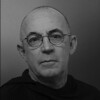



July 26, 2006 The Hulme Supercar proudly takes the name of the former World F1 Champion, international racing driver and one of New Zealand’s favourite sons, Denny Hulme. In doing so it also takes the name of Hulme’s equally famous father, Clive Hulme. Denny Hulme won eight F1 Grands Prix, two Can-Am titles, and the World Formula One Drivers Championship in 1967. His father Clive achieved war hero status during World War II for his exploits as a sniper-killer operating just behind enemy lines and Rambo-esque, one-man forays behind enemy lines saw him kill 33 snipers before he was seriously wounded and a living legend to the folks at home. For his “outstanding and inspiring qualities of leadership, initiative, skill, endurance and most conspicuous gallantry and devotion to duty,” Clive was awarded the highest medal of military valour, the Victoria Cross. The parallels between father and son make interesting reading.
Hulme raced for and against race team owners Jack Brabham and Bruce McLaren and along the way regularly beat the likes of Jim Clark, Chris Amon, John Surtees, Dan Gurney, Graham Hill and Jackie Stewart in Formula One and international sports car racing. Unfortunately, Hulme lost many close friends to the sport he loved and helped to prematurely end his international career.
When he first journied to the home of motor racing to compete on the highest level, he was the joint winner of the New Zealand Driver TO Europe scholarship, and he shared the award with another very promising Kiwi driver in George Lawton.
Their European debut year ended when Lawton crashed - he died in Denny's arms. Another close friend, Bruce McLaren was killed whilst testing the Cam-Am McLaren M8D, which also had a profound effect on Denny’s career and it was the accident that claimed the life of his friend Peter Revson whom he pulled from the wreckage that caused him to announce he would retire at the end of the 1974 season. He won one more Grand Prix before the end of the season, hence showing he could still do it, but his heart wasn’t in it and he retired.
After leaving the sport, Hulme headed the GPDA (Grand Prix Drivers' Association) for a period then went into semi-retirement but was regularly coaxed into racing in many forms of the sport, including even trucks, was a regular in big touring car races in Australia and New Zealand, and eventually died while competing in one of the great antipodean races, the Bathurst 1000 – 18 years after his international racing career finished. At a track where driver heart rates approach 200 as they enter Skyline corner (a blind, drop-away corner entered at high speed which signifies the edge of Mount Panorama), Hulme suffered a heart attack at the wheel, his car simply slewing into the Armco and coming to rest.
Denis Hulme was the son of Alfred Clive Hulme, born in Dunedin on January 24, 1911, who married Rona Marjorie Murcott in 1934 and had a son (Denny) and a daughter. Hulme was physically strong, a keen amateur wrestler and worked as a farm labourer. At the outbreak of the Second World War he enlisted, reached the rank of corporal during training and embarked for Egypt with the 23rd Battalion, being promoted to sergeant while at sea.
Clive Hulme’s son inherited some remarkable qualities and it’s hard to tell whether the behaviours were learned or just some genetic quirk , most probably a tad of both. Whatever the reason, the behavioural similarities of Clive Hulme and his male off-spring are interesting. Hulme senior made himself a national hero as a sniper-killer during the Crete-campaign where his continual Rambo-esque, one-man forays behind enemy lines saw him kill 33 snipers before he was seriously wounded. The parallels between father and son make interesting reading.
His somewhat unique solo special-forces-on-the-fly skills no doubt were grounded in living in the New Zealand countryside and working on the land, but they were first recognised when he chose to wait behind his retreating unit and take on the enemy with stealth and marksmanship and he was found to be very successful at shooting pursuing enemy from hiding.
Hulme senior was reportedly a very calm man and became quite comfortable operating on his own inside enemy lines, and soon turned his skills to stalking the most feared opponent – the other side’s specialist snipers.
Clive Hulme’s tolerance to imminent death for long periods and his complete calmness in the face of overwhelming adversity quite legitimately made him appear superhuman to his comrades and his legend grew. War records count the number of snipers he killed at 33 before he was seriously wounded.
The Dictionary of NEW ZEALAND biography records, that Clive Hulme was subsequently awarded the Victoria Cross – the ultimate medal of gallantry, for his “outstanding and inspiring qualities of leadership, initiative, skill, endurance and most conspicuous gallantry and devotion to duty.”
He returned home as a national hero, was often outspoken on political matters and had a successful business career.
There are a few obvious Hulme family character traits.The willingness and confidence to continually take highly calculated risk without raising the heart rate was one and another was “devotion to duty” – the willingness to put the interests of the greater good, or in Denny’s case, the team above themselves.
Denny famously drove a championship endurance race with his finger-tips burned to the bone because the team needed him. It was during the immediate aftermath of the death of his friend and fellow New Zealander Bruce McLaren. Without the driving services of owner Bruce McLaren, the cash-strapped McLaren team needed him driving at such a critical time in the company history, and Denny delivered in true Hulme fashion.
There is also an intertwining of the McLaren and Hulme legacy that will become part of the Hulme IP – McLaren and Hulme were competitors, co-drivers and dear friends. Hulme had travelled to Europe by virtue of winning a Driver-to-Europe series in his home country of New Zealand – the same series which launched McLaren to racing stardom two years earlier. McLaren’s legacy turned out to be his contribution as one of the great automotive engineers.
The final acknowledgment in the appropriateness of the name becoming an automotive marque should go to Denny's widow, Greeta Hulme. She penned the following letter which can be read on the site.:I was approached by Jock Freemantle on behalf of Hulme Supercars Limited in early January 2004 with his proposal to name their New Zealand Supercar “HULME” in honour of Denny.
Denny was a passionate Kiwi with an inspirational attitude, he often said: “Just do it, be positive and live the Dream”
After seeing the proposed drawings of the car, I knew, even knowing his reclusive way, he would have been proud and honoured to have such a spectacular New Zealand car named after him.
Denny, who was awarded the OBE, came from a family with a brave “DO IT-GET ON WITH IT” attitude. His father was Alfred C Hulme VC. He was awarded the Victoria Cross for action in the Second World War. He returned to New Zealand having been wounded in Crete, and settled in Te Puke.
Even when Denny went on the “Driver to Europe” scheme in 1960 and his New Zealand team mate was killed, racing at Roskilda in Denmark he chose to follow his “Do It-Get on with it” attitude, and kept racing.
Over the years he lost many of his fellow competitors, killed whilst racing, but it was not until the death of his great friend, Peter Revson in 1974 that he decided to retire from F1 racing at the end of the season.
I believe Denny, who was a basic mechanic turned driver who took on the world with his passionate spirit of “Just do it, be positive and live the dream” would have been absolutely “chuffed” that such a spectacular car was named after him. It continues his Kiwi “CAN DO” attitude.
I remain in total support.