


July 15, 2005 The first implantation of robotic arms into a human being is to be performed at the Syrian-Lebanese Hospital, in Sao Paulo, Brazil. In a statement issued by the hospital, an agreement was signed during June that will see a team of neuroscientists from Duke University, in the United States, led by Brazilian doctor Miguel Nicolelis, perform the implant in approximately three years time. A microchip implanted into the patient's brain will make it possible to control the prosthetics. Nicolelis has long been regarded as the most-likely to develop the technologies for such a procedure, having recently been named one of the 50 top scientists in the world by Scientific American.
"This is an innovative technique which is going to bring a great advance," stated the hospital's corporate superintendent, Mauricio Ceschin. According to him, this was a great discovery that has been developed by Duke University, in the United States, and coordinated by Brazilian neuroscientist Miguel Nicolelis, who is the director of the Neuroscience Laboratory at the university and established the Santos Dumont Association.
According to Ceschin, the technique consists on implanting a microchip into the human brain to translate the nerve pulses into electric pulses, making it possible for the patient to move robotic prosthetics.
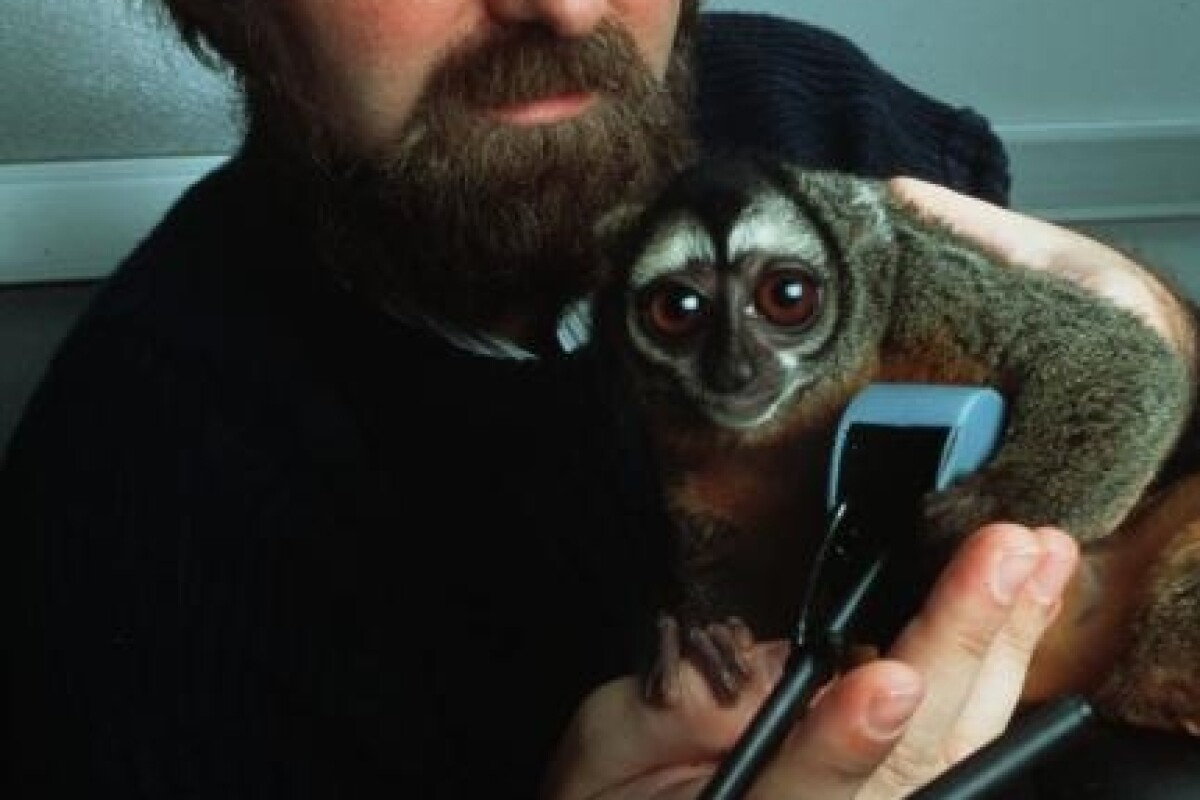
Tests were made at Duke University on monkeys that had electrodes implanted into the regions of their brains that are associated with movement. The monkeys underwent an experiment in which they had to control a joystick and accompany the trajectory of a cursor on a computer screen. The cursor movements were transmitted to a robotic arm that was installed in a room in front of the one in which the monkey was.
The second step was to remove the joystick from the monkey, who then noticed that the cursor was moved by brain waves, as if it were an extension of its body. Nicolelis believes that the adult brain has such a great adaptation capacity that it is possible to incorporate an external member.
According to Ceschin, in the period leading up to the surgery for the implantation of the robotic arms, the Education and Teaching Institute of the Syrian-Lebanese Hospital will have a laboratory dedicated to research in neuroscience, where tests and research relevant to the procedure will take place.
The superintendent also stated that a team of hospital neurosurgeons is getting ready to apply the new technique. "It will still take between two and three years for tests to be concluded on animals. The doctors must feel secure," he said.
Nicolelis established the Santos Dumont Association for Support to Research to present this new project in Brazil. He created an international network of neuroscience institutions, based in Switzerland, and the Syrian-Lebanese hospital is part of this partnership, together with centres in the United States, Jerusalem, Japan and Natal, in the northeastern Brazilian state of Rio Grande do Norte, where the project is still being developed.
Miguel Ângelo Laporta Nicolelis was born in São Paulo, graduated in medicine from the University of São Paulo (USP), where he also got a doctor's degree in neurophysiology. Nicolelis also got a doctors degree at Hahnemann University, in Philadelphia, United States.
Nicolelis currently runs the neuroscience laboratory at Duke University, which is considered the largest neuroscience laboratory in the world. He is also the University’s Neurobiology and Biomedical Engineering chair, and joint director of the Neuroengineering Centre.
Nicolelis, professor of neurobiology medical engineering and psychological and brain sciences and co-director of the Center for Neuroengineering, was recently named one of the 50 top scientists in the world by Scientific American.
The magazine cited him for his work to enablethe brain waves of monkeys to control a robotic arm. The research may be a significant breakthrough in the search for better robotic devices to help people with paralyzed limbs. The work portends a day when disabled humans may be able to manipulate things merely with their thoughts.
Nicolelis has long been regarded as the most likely scientist in the world to develop the technologies for such a procedure.
Further Reading:
Duke Engineers Developing Technology Underlying Brain-Machine Interfaces
Human Studies Show Feasibility of Brain-Machine Interfaces
Monkeys Adapt Robot Arm as Their Own
DARPA To Support Development Of Human Brain-Machine Interfaces