Form follows function for Barcelona's Solar House 2.0
« Back to Article
It's rare to see a building's form so adapted to maximizing renewable energy potential as is the case with the Endesa Pavilion, Solar House 2.0
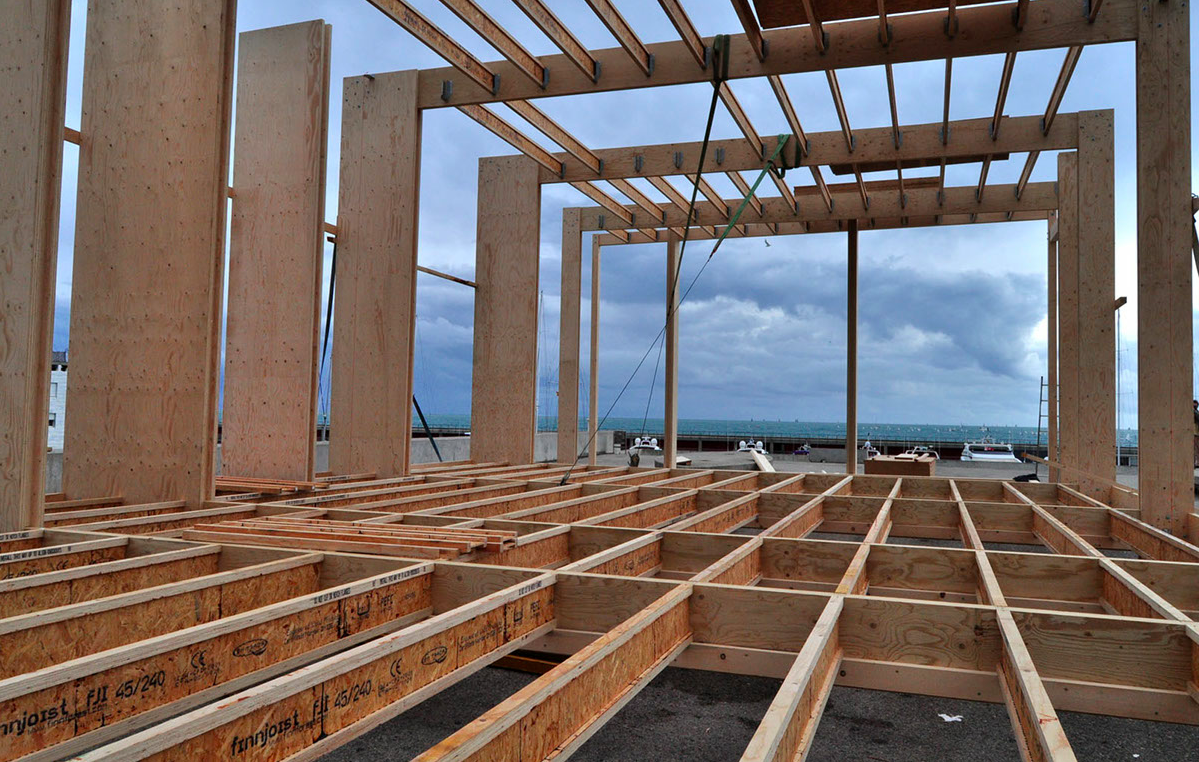
A computer numerical control (CNC) wood router was used to fabricated pieces from the buildings CAD design data in a process similar to 3D printing
In a neat twist the same protrusions act as solar barriers during summer when the sun tracks a higher course across the sky, but let sunlight directly in during winter
The 154 sq m (1,658 sq ft) building was commissioned by energy company Endesa, and forms a public information center and "control center" for the Smart City Expo
A computer numerical control (CNC) wood router was used to fabricated pieces from the buildings CAD design data in a process similar to 3D printing
Not content with a roof completely covered in photovoltaic panels, the designers at the Institute for Advanced Architecture of Catalonia (IAAC) led by Rodrigo Rubio have covered the building's south facade with protrusions supporting additional solar panels, which are angled optimally for harvesting energy from the sun
In a neat twist the same protrusions act as solar barriers during summer when the sun tracks a higher course across the sky, but let sunlight directly in during winter
As for the productivity of the solar cells, we tracked down a clue on Endesa's website, which refers to "an average daily consumption of 20 kWh and an estimated output of 100 kWh"
The building stands at Barcelona's Moll de la Marina and will open to the public for Smart City Barcelona (which we believe is taking place this coming November)
As for the productivity of the solar cells, we tracked down a clue on Endesa's website, which refers to "an average daily consumption of 20 kWh and an estimated output of 100 kWh"
A computer numerical control (CNC) wood router was used to fabricated pieces from the buildings CAD design data in a process similar to 3D printing
The 154 sq m (1,658 sq ft) building was commissioned by energy company Endesa, and forms a public information center and "control center" for the Smart City Expo
In a neat twist the same protrusions act as solar barriers during summer when the sun tracks a higher course across the sky, but let sunlight directly in during winter
The building stands at Barcelona's Moll de la Marina and will open to the public for Smart City Barcelona (which we believe is taking place this coming November)
As for the productivity of the solar cells, we tracked down a clue on Endesa's website, which refers to "an average daily consumption of 20 kWh and an estimated output of 100 kWh"
A computer numerical control (CNC) wood router was used to fabricated pieces from the buildings CAD design data in a process similar to 3D printing
The 154 sq m (1,658 sq ft) building was commissioned by energy company Endesa, and forms a public information center and "control center" for the Smart City Expo
A computer numerical control (CNC) wood router was used to fabricated pieces from the buildings CAD design data in a process similar to 3D printing
The building stands at Barcelona's Moll de la Marina and will open to the public for Smart City Barcelona (which we believe is taking place this coming November)
As for the productivity of the solar cells, we tracked down a clue on Endesa's website, which refers to "an average daily consumption of 20 kWh and an estimated output of 100 kWh"
In a neat twist the same protrusions act as solar barriers during summer when the sun tracks a higher course across the sky, but let sunlight directly in during winter
A computer numerical control (CNC) wood router was used to fabricated pieces from the buildings CAD design data in a process similar to 3D printing
In a neat twist the same protrusions act as solar barriers during summer when the sun tracks a higher course across the sky, but let sunlight directly in during winter
Not content with a roof completely covered in photovoltaic panels, the designers at the Institute for Advanced Architecture of Catalonia (IAAC) led by Rodrigo Rubio have covered the building's south facade with protrusions supporting additional solar panels, which are angled optimally for harvesting energy from the sun
The building stands at Barcelona's Moll de la Marina and will open to the public for Smart City Barcelona (which we believe is taking place this coming November)
In a neat twist the same protrusions act as solar barriers during summer when the sun tracks a higher course across the sky, but let sunlight directly in during winter
As for the productivity of the solar cells, we tracked down a clue on Endesa's website, which refers to "an average daily consumption of 20 kWh and an estimated output of 100 kWh"
In a neat twist the same protrusions act as solar barriers during summer when the sun tracks a higher course across the sky, but let sunlight directly in during winter
The 154 sq m (1,658 sq ft) building was commissioned by energy company Endesa, and forms a public information center and "control center" for the Smart City Expo
Article Summary
It's rare to see a building's form so adapted to maximizing renewable energy potential as is the case with the Endesa Pavilion, Solar House 2.0. Not content with a roof completely covered in photovoltaic panels, the designers at the Institute for Advanced Architecture of Catalonia (IAAC) led by Rodrigo Rubio have covered the building's south facade with protrusions supporting additional solar panels, which are angled optimally for harvesting energy from the sun.
« Back to Form follows function for Barcelona's Solar House 2.0
Other Images from this Gallery
Related Articles