David Szondy
Makr Shakr: World’s first crowd-controlled robotic bar makes debut
Robot bartenders aren’t new, but they tend to be more drink vending machine than cool mixologist. To inject a little panache, researchers at the MIT Senseable City Lab in collaboration with Coca-Cola and Bacardi Rum have developed Makr Shakr – a robot drink-mixing system that made its debut at the Google I/O annual developer conference in San Francisco on Wednesday as the world’s first crowd-controlled robotic bar. Read More
The Minnesota Vikings American football team has announced the final design for a new stadium to built in the Minneapolis city center that will feature the world’s largest transparent roof. This feat will be achieved using state-of-the-art polymer instead of glass to resist the extremes of Minnesota’s climate, while providing views of the city skyline and a sense of openness for fans and players alike. Read More
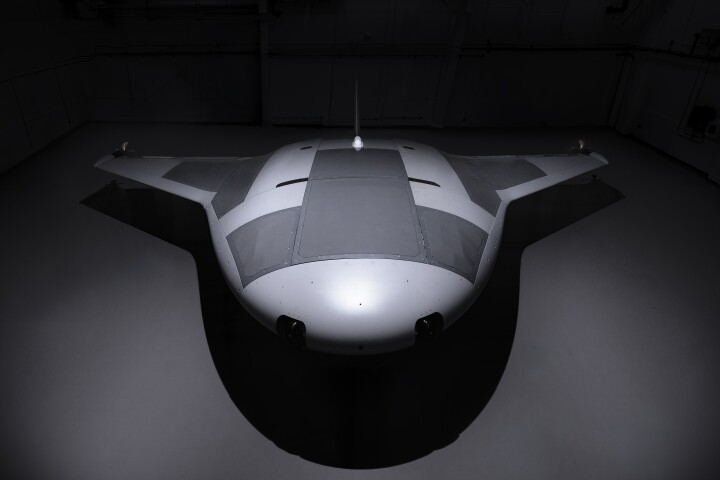
Naval aviation history was made today, as an autonomous unmanned aircraft took off from a US Navy nuclear aircraft carrier in the Atlantic Ocean off the coast of Virginia. The X-47B Unmanned Combat Air System demonstrator (UCAS-D) took to the air from the USS George H.W. Bush (CVN 77) and is part of a program to develop carrier-based unmanned combat aircraft capable of carrying out missions according to pre-programmed instructions rather than being under constant control by a ground-based pilot. Read More
We live in an age where people in the developed world are so dependent on electricity that if it wasn't available a whole civilization would collapse in a week. It’s therefore ironic that 1.32 billion people around the world are still without what most people have come to see as a basic necessity. To mark its 100th anniversary, the Panasonic Corporation plans to distribute 100,000 solar lanterns that the company has developed that can not only provide light, but also charge mobile phones and other small devices. Read More
In the unpleasantness stakes, dropping your smartphone in a bucket or water is right up there with bread landing butter-side down – only much more expensive. Sony has unveiled its Xperia ZR that, if it lives up to expectations, will mean you’ll not only be able to drop it in the pond, but take high-definition videos while doing so. Read More
If you’re a claustrophobic insomniac, the GoSleep sleeping pods probably won’t be of much interest to you, but for international travelers fighting with jet lag and tight schedules, being able to rent a private place to kip for an hour can be godsend. Abu Dhabi Airports Company (ADAC) announced last week that it has installed ten of the Finnish-designed GoSleep pods at Abu Dhabi International Airport to provide passengers with individual sleeping quarters while waiting for flights. Read More
There are so many private space ventures under development these days that it seems like you need a scorecard to keep track of them all. This week, Northrop Grumman Corporation announced that it has completed a feasibility study on a new lunar lander for the Golden Spike Company as part of a plan to send to people to the Moon within ten years at a cost of US$750 million per person. Read More
They may look somewhat bulky and a bit like someone wandered out of an avant garde theater, but a pair of concept pieces developed by students and the Royal College of Arts in London allow wearers to fine tune their senses of sight and hearing. Called “Eidos,” from the Greek for "form," "essence," "type," or "species," the system uses sensors and computer processing to select sensory input and alter it for applications in sport, the arts and medicine. Read More
One of the major anticipated applications for robots is in care for the elderly and helping them with daily tasks. This means that robots have got to adapt to human lifestyles, not the other way around, because granny can’t be expected to program the robot or rearrange her house to suit the machine’s limitations. The Carnegie Mellon University Robotics Institute’s Lifelong Robotic Object Discovery (LROD) project aims to address this by developing ways to use visual and non-visual data to help robots to identify and pick up objects so they can work in a normal human environment without supervision. Read More